
Best churros recipe fried crispy easy is really about two things: a dough that can hold its shape, and oil temperature control so you get that shattering crust without a greasy center.
If you have ever made churros that turned soft after five minutes, or browned too fast while staying raw inside, you are not alone. Churros are simple on paper, but small details like flour hydration, resting, and how you handle the piping bag tend to decide whether they come out crisp and light or heavy and oily.
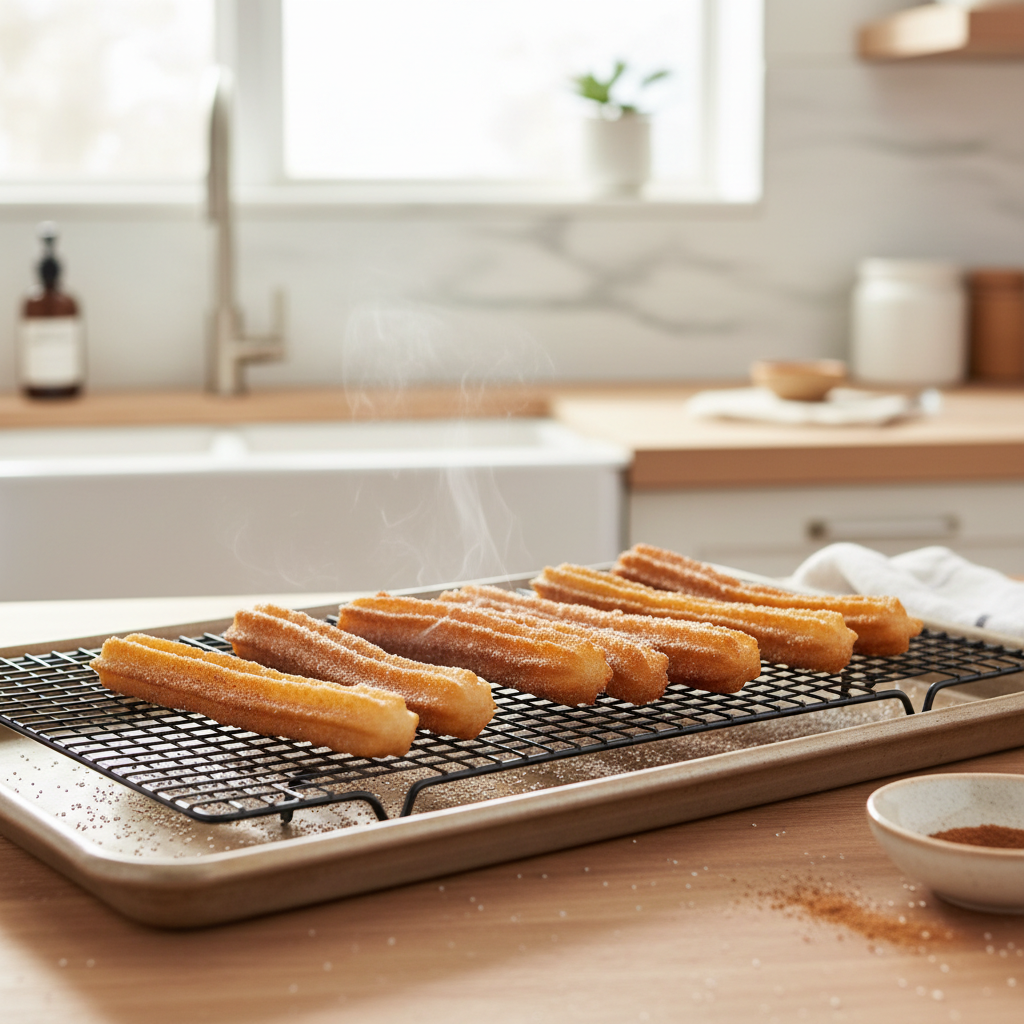
Below is the method I recommend when you want churros that stay crunchy longer, plus a quick troubleshooting guide and a few realistic shortcuts for weeknights. No mystery ingredients, just good technique and a few choices that make frying more predictable.
What makes churros crispy (and what usually ruins them)
Crisp churros come from fast steam expansion in hot oil, which creates tiny bubbles and a dry, rigid shell. When the shell forms slowly, oil seeps in and the surface stays soft.
- Oil not hot enough: the dough absorbs oil before a crust sets, so churros taste heavy.
- Oil too hot: the outside darkens while the center stays undercooked, then collapses.
- Dough too wet or too loose: it pipes easily but fries up limp, and the ridges blur.
- Skipping the drain: paper towels trap steam, which softens the crust fast.
- Overcrowding: oil temperature drops, then you chase browning by cooking longer, which can add grease.
According to USDA Food Safety and Inspection Service (FSIS), using a thermometer is one of the most reliable ways to control cooking temperatures. For frying, that simple habit usually matters more than fancy gear.
Ingredients and equipment you actually need
You can keep this pantry-friendly. If you want the “theme park” crunch, focus on the star tip and the oil temp rather than extra add-ins.
Ingredients (about 18 to 22 medium churros)
- 1 cup water
- 4 tbsp unsalted butter
- 1 tbsp sugar
- 1/2 tsp fine salt
- 1 cup all-purpose flour
- 2 large eggs
- 1 tsp vanilla extract (optional, but nice)
- Neutral frying oil (canola, vegetable, peanut)
- Cinnamon sugar: 1/2 cup sugar + 1 1/2 tsp cinnamon
Equipment
- Heavy pot or Dutch oven (more stable heat)
- Thermometer (clip-on or instant-read)
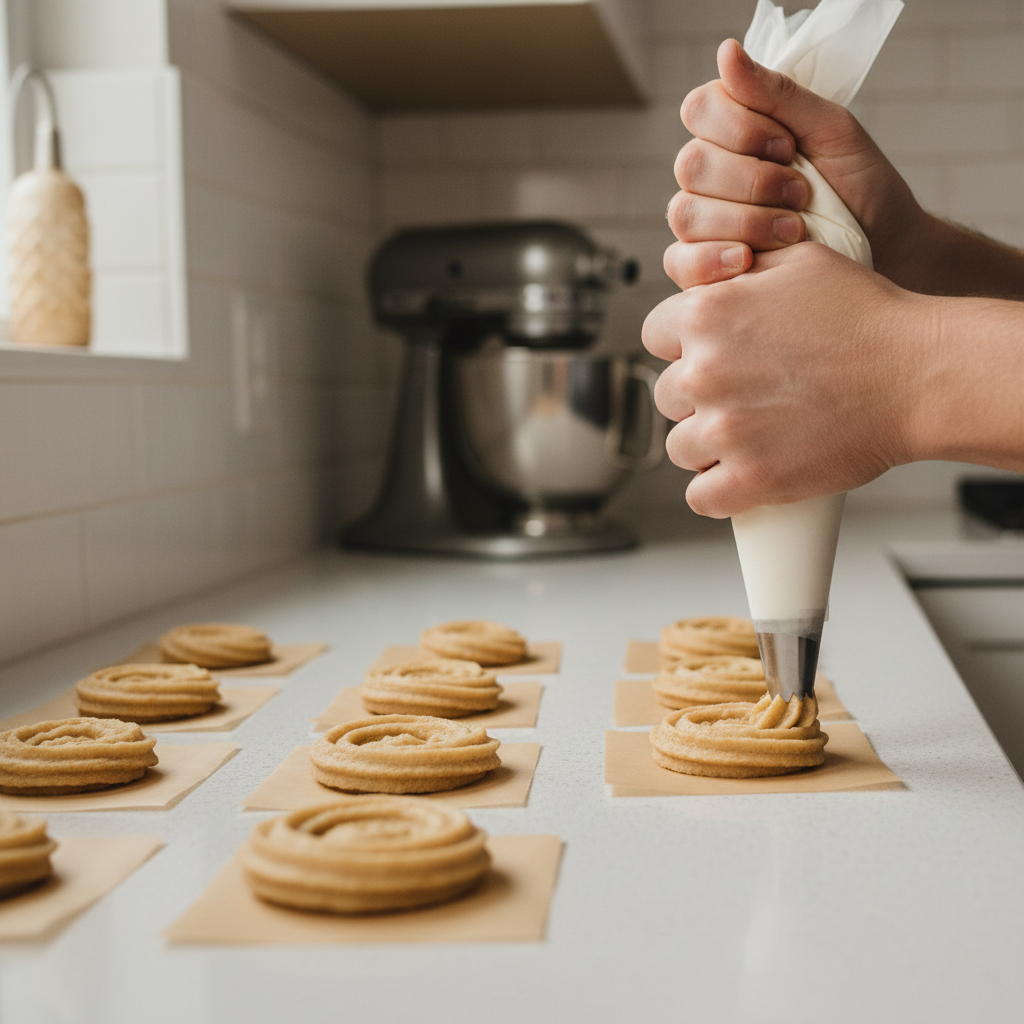
- Piping bag with a large star tip (open star gives strong ridges)
- Kitchen scissors (for clean snips)
- Wire rack over a sheet pan
The best easy fried crispy churros recipe (step-by-step)
This is a classic choux-style dough method, simplified for home frying. The dough should feel smooth, thick, and pipeable, not runny.
1) Make the dough base
In a saucepan over medium heat, combine water, butter, sugar, and salt. Bring to a simmer so the butter fully melts, then add flour all at once.
- Stir hard with a wooden spoon until a ball forms and a thin film coats the pan bottom.
- Keep stirring for about 60 to 90 seconds to cook off a bit of moisture.
2) Cool slightly, then add eggs
Move dough to a bowl, let it cool 5 to 8 minutes. Add eggs one at a time, mixing well after each. Add vanilla if using.
- Texture check: dough should hold a soft peak and pipe in thick ribbons.
- If it looks glossy and loose, it may spread in oil, next time cook the flour a touch longer.
3) Prep your station
Set a wire rack over a sheet pan. Mix cinnamon sugar in a shallow dish. Fill a piping bag fitted with a large star tip.
- Optional but helpful: pipe 4 to 6 inch strips onto small parchment squares, easier and safer to transfer.
4) Heat oil and fry in small batches
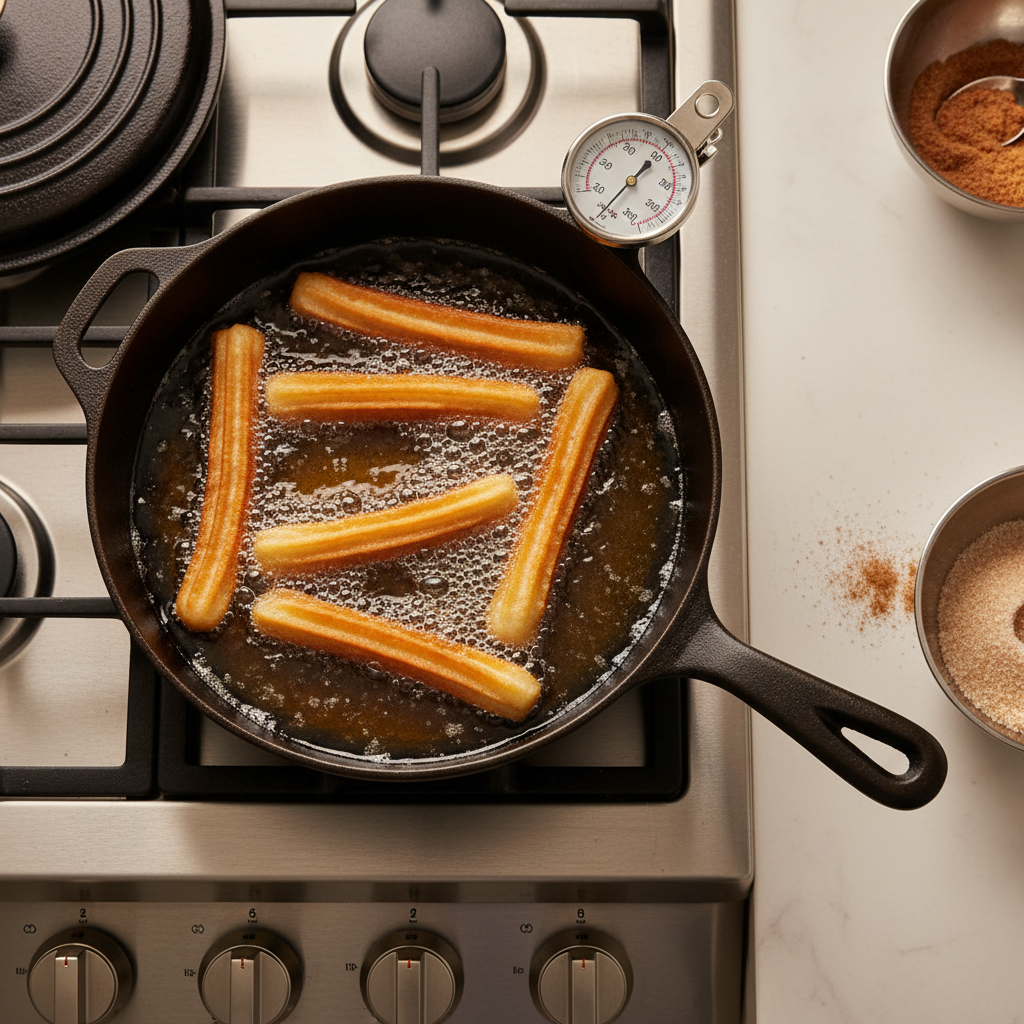
Heat 2 to 2 1/2 inches of oil to 360°F. Keep the temperature between 350°F and 365°F as you fry.
- Pipe dough directly over the pot and snip with scissors, or lower parchment squares and peel them off after 10 to 15 seconds.
- Fry 2 to 4 minutes total, turning once or twice, until deep golden and set.
- Let oil recover back toward 360°F between batches, this is where crispness is won or lost.
5) Drain properly, then coat
Move churros to the wire rack for 30 to 60 seconds, then roll in cinnamon sugar while still warm. If you coat too early while oil still clings, the sugar can melt into a sticky layer.
Temperature and timing cheat sheet (use this table)
If you only remember one thing from this guide, remember this: a steady fry temperature makes the best churros recipe fried crispy easy far more repeatable.
| Step | Target | What you’ll notice |
|---|---|---|
| Oil preheat | 360°F | Dough sizzles immediately, ridges stay defined |
| During frying | 350–365°F | Even browning, hollow-ish interior, less oiliness |
| Batch size | 3–5 pieces | Oil temp stays stable, no pale spots |
| Drain | Rack, not paper | Steam escapes, crust stays crisp longer |
| Coat in sugar | After 30–60 sec drain | Sugar clings without melting into syrup |
Quick self-check: why are your churros not crispy?
If your last batch disappointed you, pinpoint the failure before changing five things at once.
- Soft after cooling: drained on paper towels, kitchen too humid, or oil ran cool.
- Greasy mouthfeel: oil below range, overcrowded pot, or dough too wet.
- Hollow but too dark: oil too hot, or churros too thin.
- Blown-out seams: weak ridges from a round tip, or dough overmixed and too slack.
- Raw center: thick churros, rushed browning, or oil temp spikes.
Solutions by scenario (so you can fix the next batch)
If your churros go soggy fast
- Drain on a wire rack, then keep them spaced out, stacking traps steam.
- Skip covering with foil, it basically steams the crust.
- If you need a short hold, keep them in a warm oven around 200°F with the door cracked slightly.
If they are oily
- Raise oil back to temp before frying again, patience beats longer cook time.
- Make sure the dough cooked long enough in the pan, it should look drier and pull cleanly from the sides.
- Pipe slightly thinner pieces, very thick churros can trap moisture and invite longer frying.
If they split or look ragged
- Use a large star tip, the ridges help control expansion and improve crisp edges.
- Do not whip extra air into the dough, mix until combined and smooth.
Safety notes and common mistakes (worth reading)
Hot oil is not forgiving, and churro dough can splatter when it hits the pot. Many home accidents happen when people rush the transfer or fry in a shallow pan.
- Use a deep, heavy pot and keep oil below halfway up the sides.
- Dry tools only: water + hot oil can cause aggressive spattering.
- Keep kids and pets away from the stove during frying.
- If you feel unsure, consider a smaller batch in a countertop fryer and follow the manufacturer guidance.
According to National Fire Protection Association (NFPA), cooking is a leading cause of home fires, and hot oil is a common risk point. Staying nearby and controlling heat makes a real difference.
Serving, storing, and reheating (realistic expectations)
Churros are at their peak within about 20 to 40 minutes, after that, even a great batch loses some crunch. Still, you can get them back close.
- Best serving: right after coating, with chocolate sauce, dulce de leche, or coffee.
- Storing: cool fully, then keep in a loosely covered container, airtight can trap moisture.
- Reheating: 350°F oven for 5 to 8 minutes on a rack, avoid the microwave unless you accept softness.
- Freezing: possible, but texture varies by freezer and reheat method, freeze in a single layer first.
Key takeaways (bookmark these)
- Temperature control beats everything: aim for 350–365°F while frying.
- Drain on a rack, paper towels often make crisp churros go limp.
- Do not overcrowd, small batches stay hotter and crisp better.
- Coat in cinnamon sugar after a short drain, so it sticks without melting.
Conclusion: make it easy, keep it crispy
If you want a best churros recipe fried crispy easy enough for repeat weekends, commit to the thermometer, the wire rack, and smaller batches, those three moves fix most “why are my churros soft” problems. Try one batch exactly as written, take quick notes on dough thickness and oil behavior, then tweak only one variable next time.
If you are making churros for a party, do a small test fry earlier in the day, it saves stress and helps you lock in timing for your stove and pot.
If you need a more hands-off approach, you can prep the dough and piping bag in advance, then fry right before serving so the texture matches what people expect from churros.