
how to cook corn on cob boiled comes down to one thing most people guess wrong, timing, because corn turns from sweet and crisp to dull and soft faster than you think.
If your corn keeps tasting “fine” but not amazing, it’s usually not the corn’s fault, it’s the pot setup, the boil strength, or how long it sits after cooking. A few small tweaks make a bigger difference than fancy ingredients.
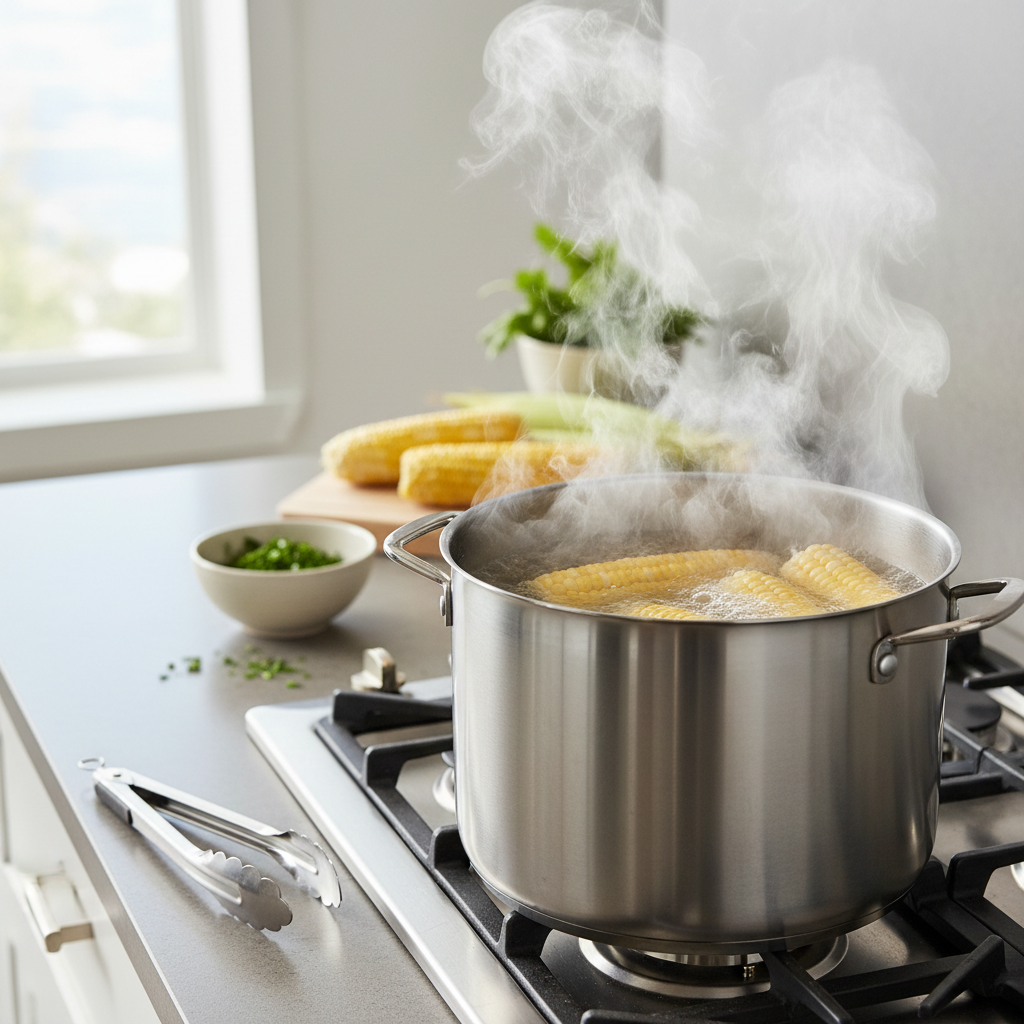
I’ll walk you through how to pick a boiling method that fits your corn and your schedule, give you a simple time table, then cover the common mistakes that cause chewy or watery flavor.
What “perfect” boiled corn means (and why it’s tricky)
“Perfect” corn usually means kernels feel plump, pop when you bite, and taste sweet without needing much help from butter or salt. The tricky part is that heat keeps moving inward even after you pull corn from the water, so overcooking happens easily when you treat it like pasta.
Fresh corn also behaves differently than corn that sat in the fridge for days. Sugar in corn naturally converts to starch over time, so older corn often tastes less sweet and can feel a little tougher even when cooked correctly.
- Best case: very fresh corn, short boil, serve right away.
- Still good case: supermarket corn, slightly longer cook, finish with salt and butter.
- Harder case: older corn, benefit from a quick “reheat/steep” method and bold seasoning.
Before you boil: choose corn and prep it the smart way
Start by choosing ears with bright green husks, tight leaves, and silk that looks slightly sticky rather than dry. If the kernels look full and evenly spaced near the tip, you’re already winning.
Prep stays simple, shuck and remove silk, then rinse quickly. If the ears are long, breaking them in half helps them fit without cramming, cramming can drop the water temperature too much.
Quick self-check: is your corn “very fresh” or “needs help”?
- Very fresh: husk feels cool and moist, silk is pale/golden, kernels look glossy.
- Needs help: husk looks dry, silk looks dark and brittle, kernels look a bit dented.
If your corn falls into “needs help,” don’t panic, it can still taste great, you’ll just lean more on the steeping method and seasoning choices below.
The classic method: rolling boil + short cook
This is the method most people want when they search how to cook corn on cob boiled, it’s fast, reliable, and doesn’t require extra steps.
Step-by-step
- Fill a large pot with enough water to fully cover the corn, cover with a lid to bring it to a boil faster.
- Bring water to a rolling boil (big, active bubbles), then add the corn.
- Put the lid back on, let it return to a boil, then start your timer.
- Cook until kernels look bright and feel tender when pierced, then remove and serve immediately.
According to USDA Food Safety and Inspection Service, prompt refrigeration of cooked foods helps reduce foodborne risk, so if you’re not serving right away, cool and chill leftovers within about two hours, sooner if your kitchen runs hot.
Boiling time table (fresh, chilled, and frozen)
Use this as a starting point, then adjust based on ear size and how fresh the corn seems. In a real kitchen, timing is more like a range than a single magic number.
| Type of corn | Water state | Typical time | What you’re aiming for |
|---|---|---|---|
| Very fresh sweet corn | Rolling boil | 2–4 minutes | Bright kernels, crisp-tender bite |
| Supermarket corn (fridge-cold) | Rolling boil | 4–7 minutes | Tender with a little snap |
| Large ears or older corn | Rolling boil | 6–10 minutes | Fully tender, not rubbery |
| Frozen corn on the cob | Rolling boil | 5–8 minutes | Heated through, juicy kernels |
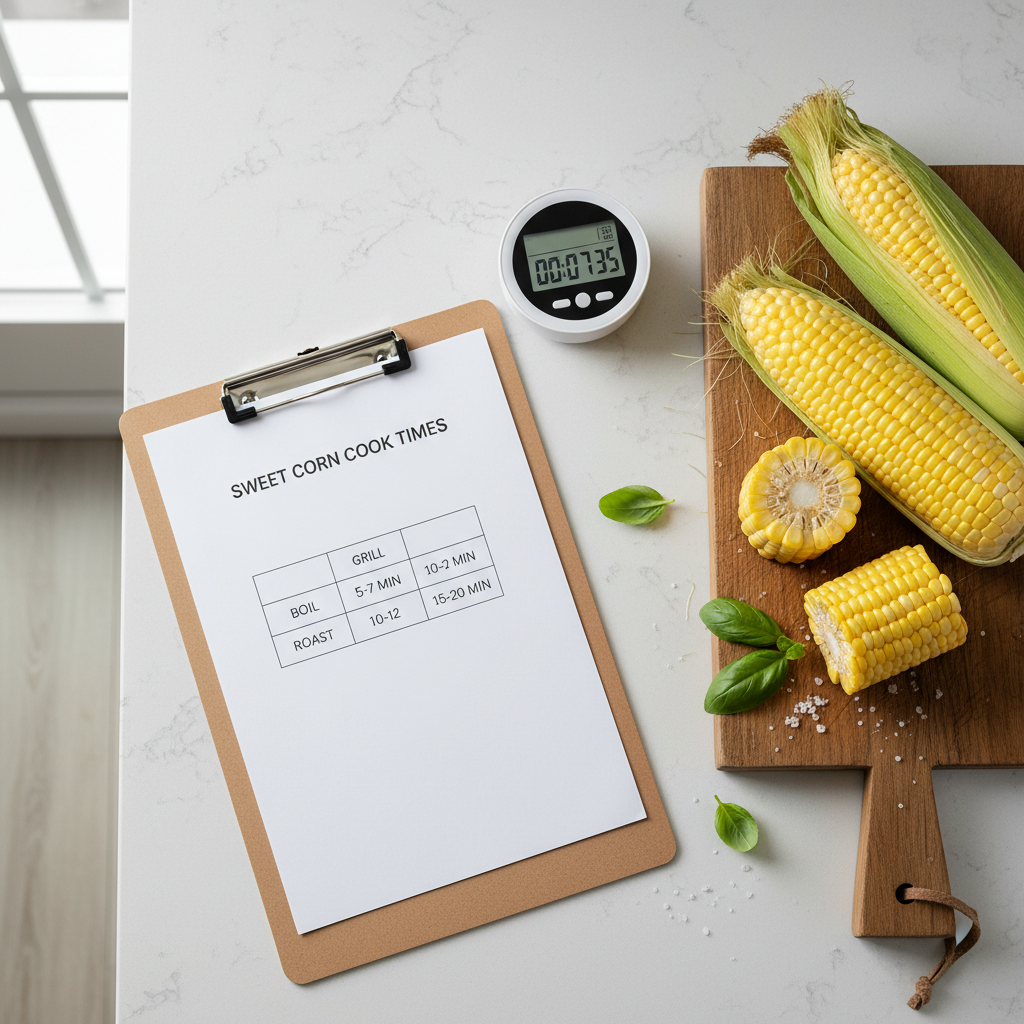
One practical tip, start checking early. If you wait until you “think it’s done,” you often land on overdone.
The steeping method: better texture, less stress
If you’ve ever overcooked corn while juggling burgers or guests, steeping is the calmer option. You bring water to a boil, turn off heat, add corn, then let it sit covered. It’s forgiving, and the texture stays closer to crisp-tender.
How to do it
- Bring a large pot of water to a boil.
- Turn off the burner, add corn, cover.
- Steep 8–12 minutes depending on thickness and how cold the corn is.
- Remove and serve, or hold warm in the covered pot up to about 15 more minutes.
This method is also a good “save” when you suspect your corn isn’t super fresh, the gentler heat can keep kernels from toughening.
Seasoning choices: what to add to the water (and what not to)
There’s a lot of folklore here, sugar, milk, butter, salt. Some of it works in certain kitchens, some of it just wastes ingredients. The main thing, water seasoning won’t replace finishing salt and butter, it only nudges flavor.
What usually helps
- Salt after cooking: better control, and the corn tastes brighter.
- A little sugar for older corn: can round out flavor, especially when corn tastes starchy.
- A splash of lemon: small lift, especially if you finish with herbs.
What to skip in most cases
- Butter in the boiling water: it mostly floats and coats the pot more than the corn.
- Lots of milk: can scald and complicate cleanup, the payoff is subtle.
If you want bold flavor, treat boiling as cooking, then use finishing as seasoning. That’s where the real difference shows up.
Practical finishing ideas (the part your guests remember)
When corn comes out of the pot, dry it briefly with a towel so toppings cling instead of sliding off. Then pick one direction and commit, “a little of everything” can turn muddy.
Easy finishing combos
- Classic: butter, kosher salt, cracked black pepper.
- Chili-lime: mayo or butter, chili powder, lime zest, pinch of salt.
- Herby: butter, chopped parsley or basil, flaky salt.
- Garlic-parm: butter, garlic powder, grated Parmesan, black pepper.
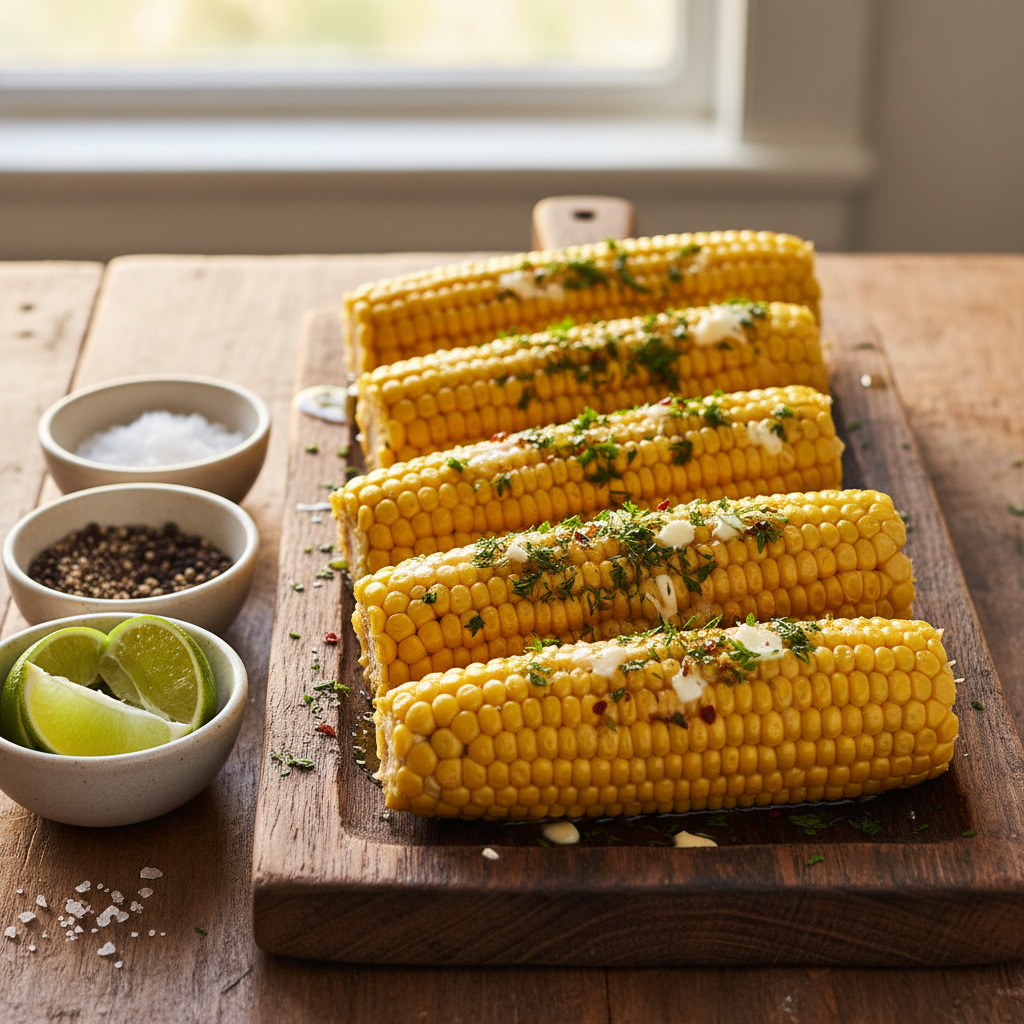
If you’re cooking for a group, set up a small “corn bar” with two butters and two dry seasonings, people love choosing without you doing extra work.
Troubleshooting: why corn turns out chewy, watery, or bland
Most corn problems trace back to a few predictable issues, and the fixes are simple once you name the cause.
- Chewy or tough: corn may be older, or it cooked too long at a hard boil. Try steeping next time, and check earlier.
- Watery flavor: corn sat in hot water too long after it finished. Pull it out, don’t “hold” it uncovered in the pot.
- Bland: under-seasoned at the end, not in the water. Finish with salt, fat, and one bright element like citrus or herbs.
- Uneven doneness: pot too small, ears packed tight, water temperature drops. Use a bigger pot or cook in batches.
If you keep missing the mark, a thermometer won’t help much here, your best tool is a timer plus a quick taste check on one ear.
Key takeaways and a simple “do this next time” plan
The cleanest path to consistently good corn is short cooking, quick serving, and finishing seasoning you actually like. When you want less pressure, steeping beats guessing.
- Fresh corn: rolling boil, 2–4 minutes, serve right away.
- Typical grocery-store corn: 4–7 minutes, or steep 8–12 if you’re multitasking.
- Flavor upgrade: dry the corn, then butter plus salt, add one bold accent.
If you’re cooking tonight, pick the method based on your schedule, not your optimism, then set a timer and start checking early, that one habit fixes most “meh” corn.