
The best beef stew recipe slow cooker approach is less about a “secret ingredient” and more about a few small choices that stack up: the right cut, smarter browning (when you can), and thickening at the right time.
If you’ve ever opened the lid to find chewy beef, dull flavor, or a thin broth that tastes like warm vegetable water, you’re not alone. Slow cookers are forgiving, but beef stew has a couple predictable failure points.
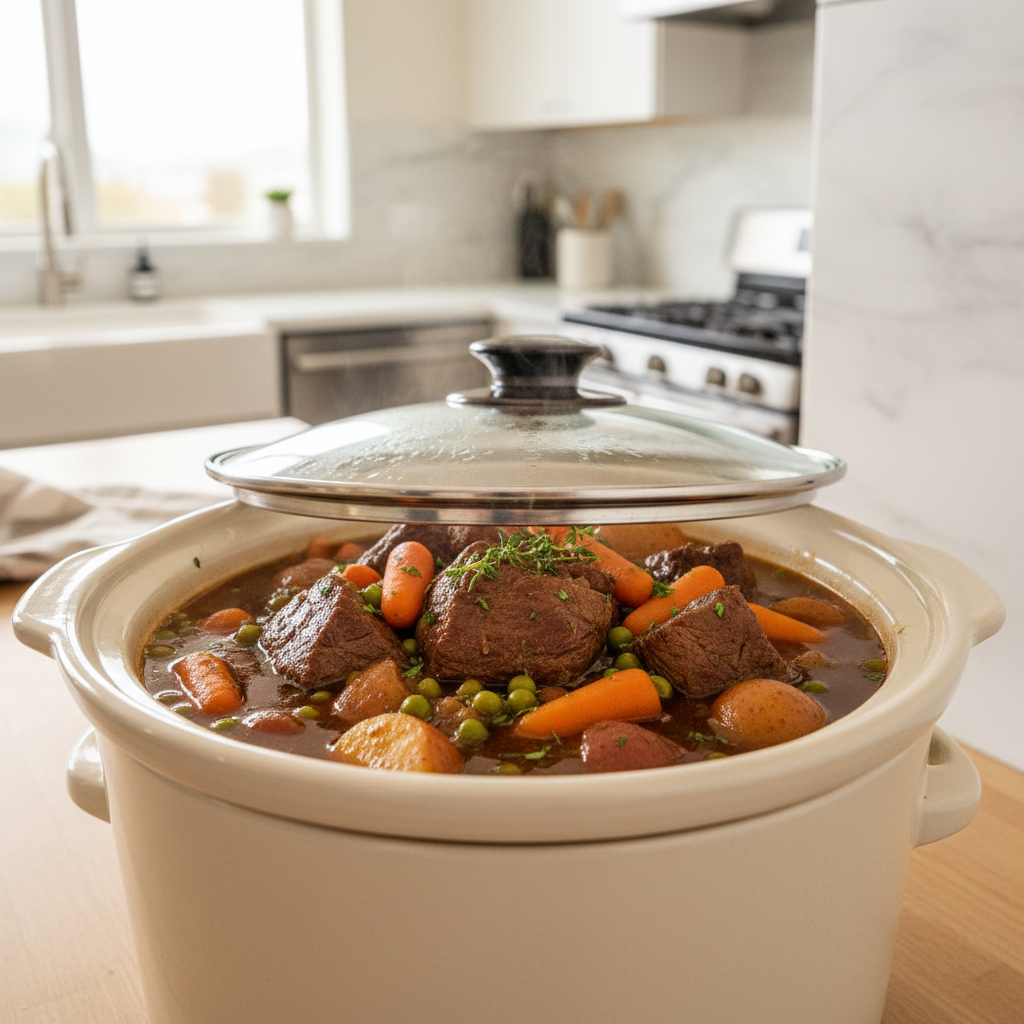
This guide gives you a reliable 2026-ready process, plus a quick table for swaps, a don’t-skip checklist, and a few realistic options if you want “dump and go” or if you have time to brown. You’ll end with a stew that tastes like it simmered on the stove all day, without hovering.
What makes a slow cooker beef stew actually “the best”
Most complaints about slow cooker stew trace back to texture and concentration. The cooker traps steam, so flavors can stay muted and liquid can get excessive, while lean beef turns tight and dry.
- Cut matters: chuck roast (well-marbled) usually beats lean stew meat blends.
- Timing matters: potatoes and carrots can go mushy if cut too small or cooked too long on high.
- Thickening matters: flour added too early can taste pasty, starch added too late can clump.
- Salt and acid matter: slow cooking can flatten flavor, a small splash of vinegar or Worcestershire near the end often helps.
According to USDA Food Safety and Inspection Service (FSIS)... slow cookers are safe when used properly, but they emphasize keeping foods at safe temperatures and following appliance directions, which is relevant when people “half-cook” or leave stew cooling too long.
Ingredient list (with smart substitutions)
This recipe aims for classic American comfort flavor, not overly wine-forward. If you like a stronger wine profile, you can swap in more red wine and reduce broth slightly.
Core ingredients
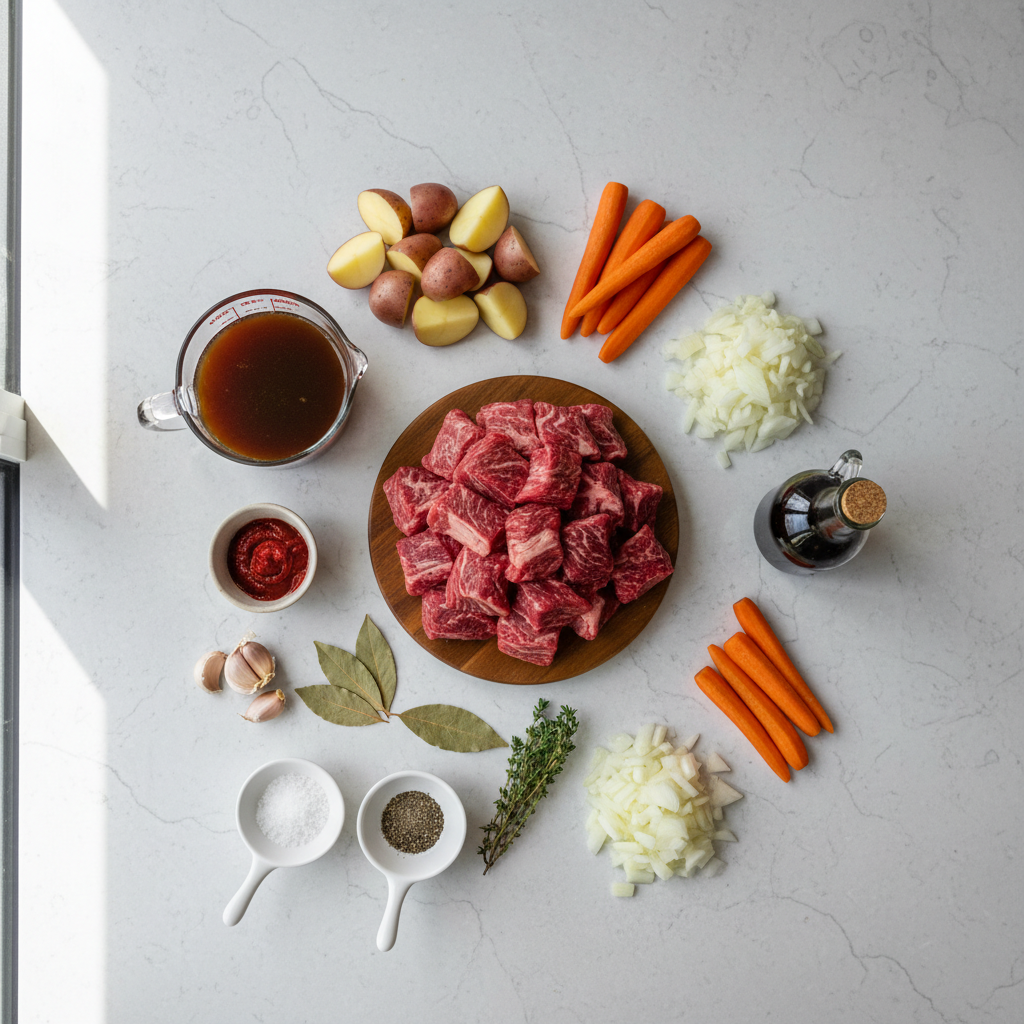
- Beef: 2.5 to 3 lb chuck roast, cut into 1.5-inch chunks
- Aromatics: 1 large onion (or 2 medium), 4 cloves garlic
- Vegetables: 4 carrots (thick slices), 1.5 lb Yukon gold or red potatoes (2-inch chunks), 2 celery ribs (optional)
- Liquid: 3 cups beef broth (low-sodium helps you control salt)
- Umami: 2 tbsp tomato paste, 1 tbsp Worcestershire
- Herbs: 2 bay leaves, 1 tsp dried thyme (or 1 tbsp fresh)
- Thickener: cornstarch slurry (2 tbsp cornstarch + 2 tbsp cold water)
- Finish: 1–2 tsp apple cider vinegar or red wine vinegar, black pepper
Quick substitution table
| What you have | Swap | What to expect |
|---|---|---|
| Pre-cut “stew meat” | Use it, but pick pieces with visible marbling | More variable tenderness |
| Russet potatoes | Cut larger, add in last 4–5 hours on Low | Softer, can break down |
| No tomato paste | Use 1/2 cup crushed tomatoes, reduce broth a bit | Slightly lighter body |
| No Worcestershire | Use soy sauce (1–2 tsp) + a touch more vinegar | Still savory, different aroma |
| Want gluten-free | Skip flour, use cornstarch at the end | Clean thickening, glossy broth |
The recipe: best slow cooker beef stew (step-by-step)
This is written for real life: you can brown the beef for deeper flavor, but you can also skip it and still get a good pot.
Step 1: Prep and season
- Pat beef dry, then season with 1.5 tsp kosher salt and black pepper.
- Cut vegetables into big, stew-friendly chunks. Smaller pieces overcook fast.
Step 2 (optional but recommended): Brown the beef
- Heat a skillet with a thin layer of oil over medium-high.
- Brown beef in batches, 2–3 minutes per side. You’re building flavor, not cooking through.
- Scrape browned bits into the slow cooker. That’s the good stuff.
Step 3: Build the pot
- Add onion, garlic, carrots, potatoes, celery (if using).
- Whisk broth with tomato paste and Worcestershire, then pour in.
- Add thyme and bay leaves.
Step 4: Cook
- Low: 8–9 hours for the most forgiving tenderness.
- High: 4–5 hours, but the window between “tender” and “dry” gets smaller.
Try not to keep lifting the lid. Every peek drops heat and stretches cook time.
Step 5: Thicken and finish
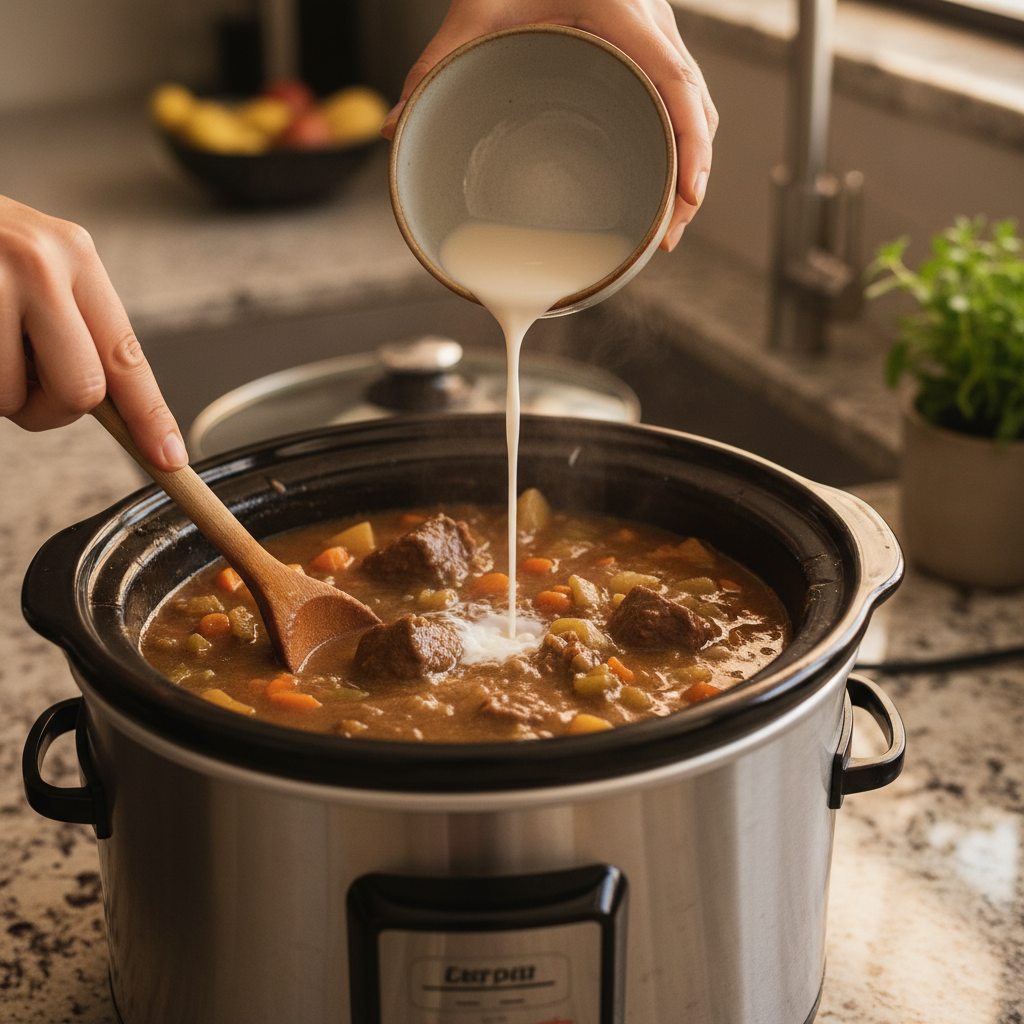
- In the last 20–30 minutes, mix cornstarch with cold water until smooth.
- Stir slurry into the stew, cover, cook until lightly thick.
- Turn off heat, stir in vinegar (start small), then taste and adjust salt and pepper.
Why stew turns out watery or bland (and how to fix it fast)
Watery stew is common because vegetables release moisture and slow cookers don’t evaporate much. Bland stew often comes from under-salting early and missing an acidic “lift” at the end.
- Too much broth: next time reduce broth by 1/2–1 cup, especially if skipping browning.
- No concentration: tomato paste helps, but you can also sauté it briefly in the browning pan.
- Under-seasoning: season beef early, then re-taste after thickening.
- No acid: a teaspoon of vinegar near the end can make flavors pop without tasting sour.
If you already cooked it and it’s thin, remove the lid and cook on High for 20–30 minutes, then add a small extra slurry if needed.
Quick self-check: which version should you cook tonight?
Pick the path that matches your time and expectations. This is where most “recipe fails” get prevented.
- I want maximum flavor: brown beef, use chuck, cook on Low, finish with vinegar.
- I need true dump-and-go: skip browning, cut onion smaller, keep broth slightly lower, add extra black pepper at the end.
- I’m cooking for picky eaters: go lighter on thyme, keep vinegar minimal, add peas at the end for color.
- I’m meal prepping: keep potatoes slightly larger, they hold texture better after reheating.
Practical tips that change the outcome (without extra fuss)
These are the “little things” that tend to separate an okay crockpot stew from one you actually crave.
- Cut beef evenly: inconsistent chunks cook inconsistently, and the small ones dry out.
- Don’t over-flour early: if you like flour, dust beef lightly before browning, but avoid dumping raw flour into the pot.
- Add delicate veg late: peas, green beans, mushrooms, spinach go in during the last 20–40 minutes.
- Rest before serving: 10 minutes off-heat helps the broth settle and taste more “together.”
Key takeaways: chuck roast + Low heat + end-of-cook thickening + a small acidic finish is the most consistent path for slow cooker beef stew.
Food safety and when to get extra help
Beef stew is usually straightforward, but food safety gets blurry when people start the slow cooker late, leave it on warm too long, or cool a large pot on the counter. According to CDC... safe food handling includes avoiding leaving perishable foods in the temperature danger zone for extended periods, so it’s smart to refrigerate leftovers promptly in shallow containers.
- Unsure your slow cooker runs hot enough: consider using a thermometer, or follow your appliance manual for timing.
- Serving someone immunocompromised or pregnant: it may be worth being stricter about temps and storage, and asking a clinician for personalized guidance if you’re uncertain.
- Allergy concerns: Worcestershire and broth can contain allergens, check labels if needed.
Conclusion: a stew you can trust on a busy day
If you want a dependable comfort dinner, this best beef stew recipe slow cooker method keeps the process simple while fixing the usual problems: tough meat, thin broth, and flat flavor.
Pick one upgrade for your next batch, either browning the beef or finishing with a small vinegar splash, then keep the rest steady. Once you taste the difference, you’ll know which steps are worth your time.