
best pav bhaji recipe mumbai street flavor is all about two things most home cooks underdo: aggressive butter-toasting on the pav and a bhaji that’s mashed, spiced, and simmered until it tastes “stalled-in-traffic-good.” If your pav bhaji comes out sweet, thin, or oddly bland, it’s usually not your potatoes, it’s your heat management and masala timing.
For Americans cooking this at home, the challenge is real: produce tastes a bit different, your stove may run hotter or cooler, and Indian street-style “tawa cooking” isn’t the same as a quick sauté in a nonstick pan. The good news, you can get very close without special equipment, as long as you commit to the process.
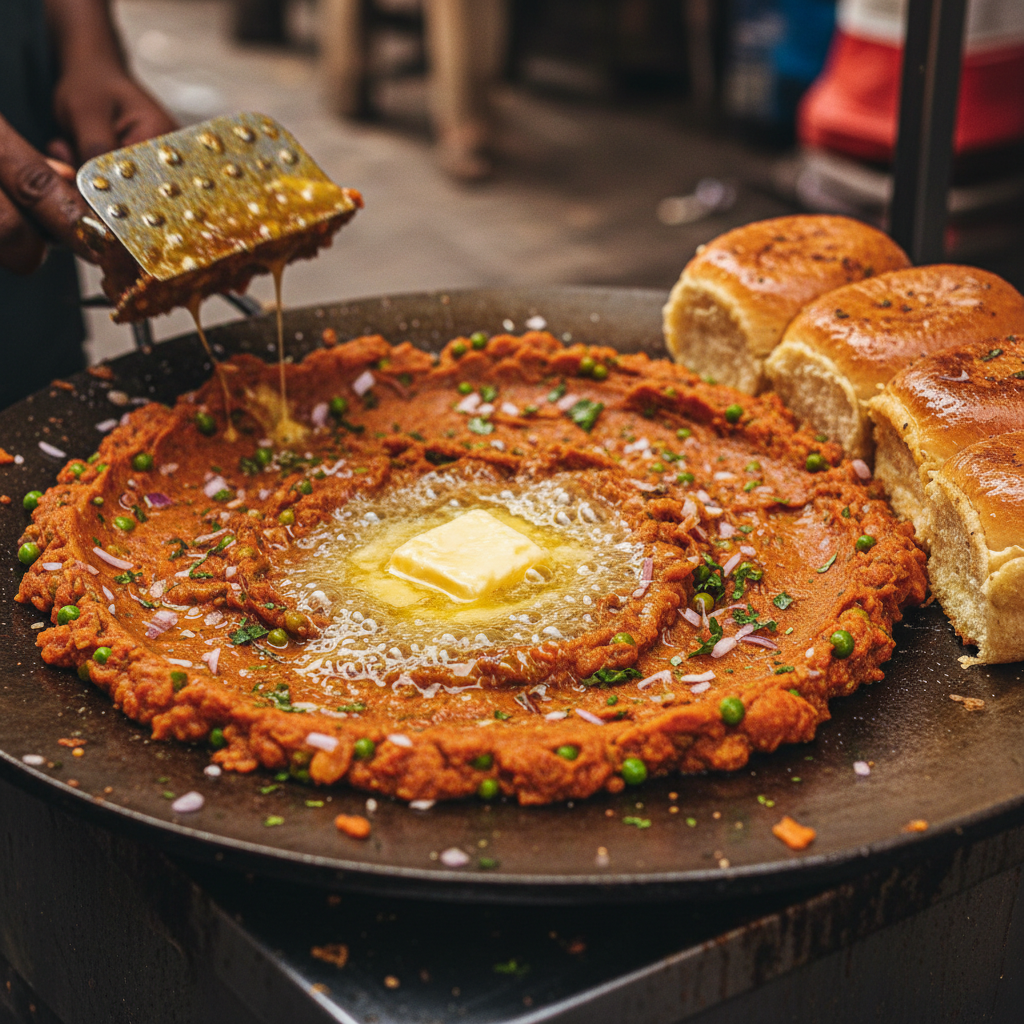
This guide focuses on the street cues that matter: the spice base, the mash texture, and the butter-forward finishing. You’ll also get a quick ingredient swap table for U.S. grocery runs, plus a checklist so you can diagnose why your batch doesn’t taste like the cart outside a Mumbai station.
What makes Mumbai street pav bhaji taste different
The “secret” usually isn’t a mysterious ingredient, it’s technique. Street vendors build layered flavor fast, then keep it moving on the hot surface so it stays punchy and slightly smoky.
- High heat + continuous movement: The bhaji gets a little sear, not a gentle stew vibe.
- Masala cooked in fat: Spices bloom in butter or oil so they taste rounded, not raw.
- Tomato-onion base reduced properly: If the base stays watery, the end result tastes flat.
- Butter is a seasoning: It’s not garnish, it’s part of the flavor architecture.
- Pav toasted in butter until crisp-edged: Soft bread won’t carry street-style intensity.
According to the USDA, hot foods should be kept at 140°F (60°C) or above for safety during holding, which matters if you’re making bhaji ahead for a party, since it’s easy to leave it lukewarm on the stove while toasting pav in batches.
Ingredients you need (and smart U.S. substitutions)
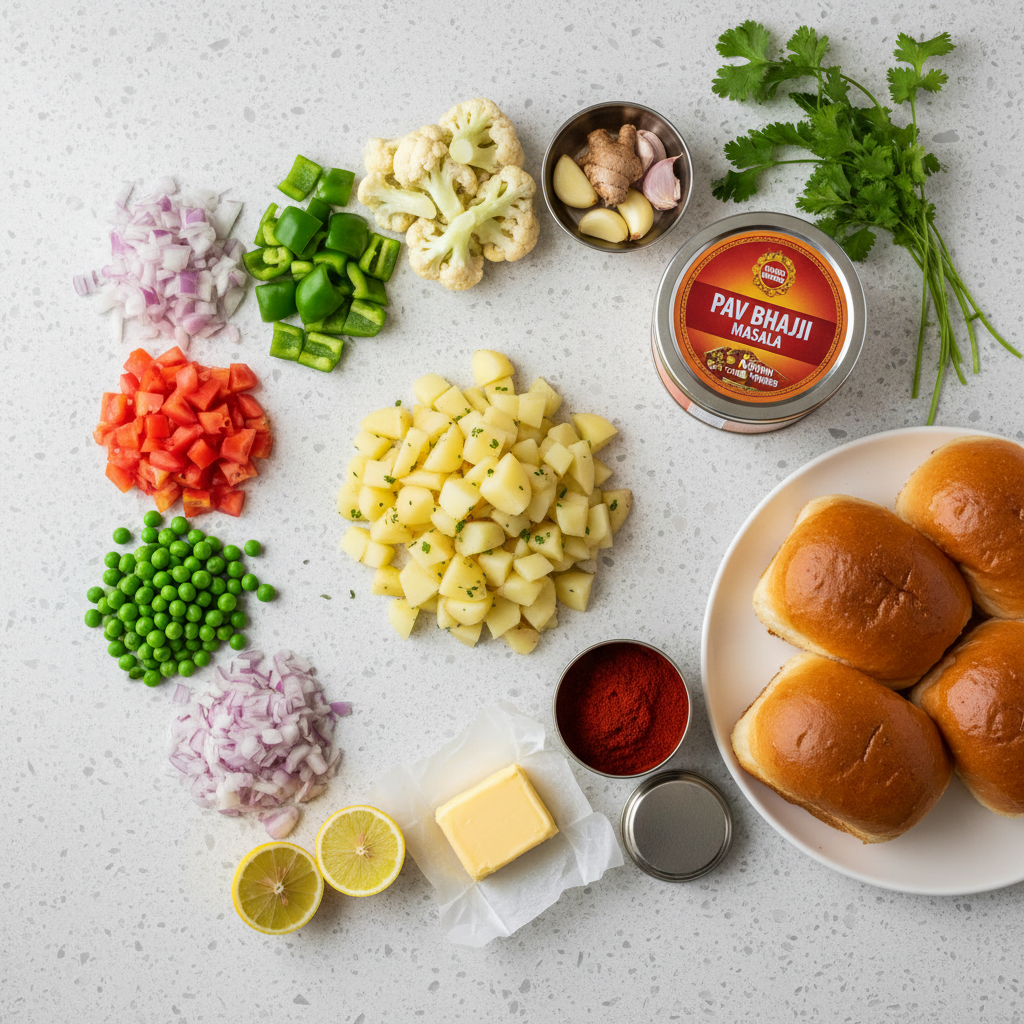
You can cook a convincing street-style pot with standard U.S. produce. The one item that really changes the profile is a solid pav bhaji masala blend, because it brings that distinct aroma and color.
Core ingredients
- Potatoes (russet or Yukon gold)
- Cauliflower
- Green peas (frozen works well)
- Onion (yellow)
- Tomatoes (Roma or vine-ripened)
- Green bell pepper (capsicum)
- Ginger-garlic paste (or minced ginger + garlic)
- Pav bhaji masala (any reputable Indian brand)
- Kashmiri chili powder (for color + mild heat)
- Butter (yes, real butter), plus neutral oil
- Lemon, cilantro, and diced onion for serving
- Pav buns (or dinner rolls as a backup)
Substitution table (so you don’t stall mid-cook)
| Street-style ingredient | Best U.S. swap | Flavor impact |
|---|---|---|
| Pav buns | Soft dinner rolls or Hawaiian rolls (less sweet preferred) | Slightly different aroma, still works if butter-toasted |
| Kashmiri chili powder | Sweet paprika + a pinch of cayenne | Color stays strong, heat becomes adjustable |
| Amul-style salted butter | Any salted butter | Close enough, finish with a small knob at serving |
| Tawa (flat griddle) | Cast iron skillet or flat-top griddle | Cast iron gives better browning than nonstick |
Quick self-check: why your pav bhaji doesn’t taste “street”
If you’ve tried a few times and it still misses, this is the part to read slowly. Most batches fail in predictable ways.
- Too sweet: Tomatoes not cooked down, or you used sweet rolls, or too many carrots/beets.
- Too watery: Veg boiled with excess water, or you didn’t simmer after mashing.
- Spices taste raw: Masala added late without frying in fat.
- No “tawa” aroma: Heat too low, pan too crowded, no browning stage.
- Pav feels limp: Not enough butter, or pan not hot enough to crisp edges.
One more subtle issue: if you’re chasing best pav bhaji recipe mumbai street intensity but using only olive oil, the flavor can drift. Neutral oil plus butter usually lands closer to the expected profile.
Best Mumbai street pav bhaji recipe (step-by-step)
This method assumes you’re cooking for 4. Scale up easily, but keep the “reduce, mash, simmer” rhythm the same.
1) Boil the vegetables until mashable
- Peel and cube 3 medium potatoes, cut 2 cups cauliflower florets, measure 1 cup peas.
- Boil or pressure-cook with salt until very soft. Drain, but save 1–2 cups cooking liquid for later.
2) Build the base on high heat
- Heat a wide pan, add 1 tbsp oil + 2 tbsp butter.
- Add 1 large onion (finely chopped), cook until translucent with light browning at edges.
- Add 1 tbsp ginger-garlic paste, cook until sharp smell fades.
- Add 3–4 chopped tomatoes and 1 chopped green bell pepper, cook until the mixture looks jammy and oil starts to separate in spots.
3) Bloom the spices (this is where street flavor shows up)
- Add 1.5–2 tbsp pav bhaji masala, 1–2 tsp Kashmiri chili powder, and a pinch of turmeric.
- Cook 30–60 seconds in the fat, stirring constantly so spices don’t scorch.
4) Add veg, mash, and simmer for the right texture
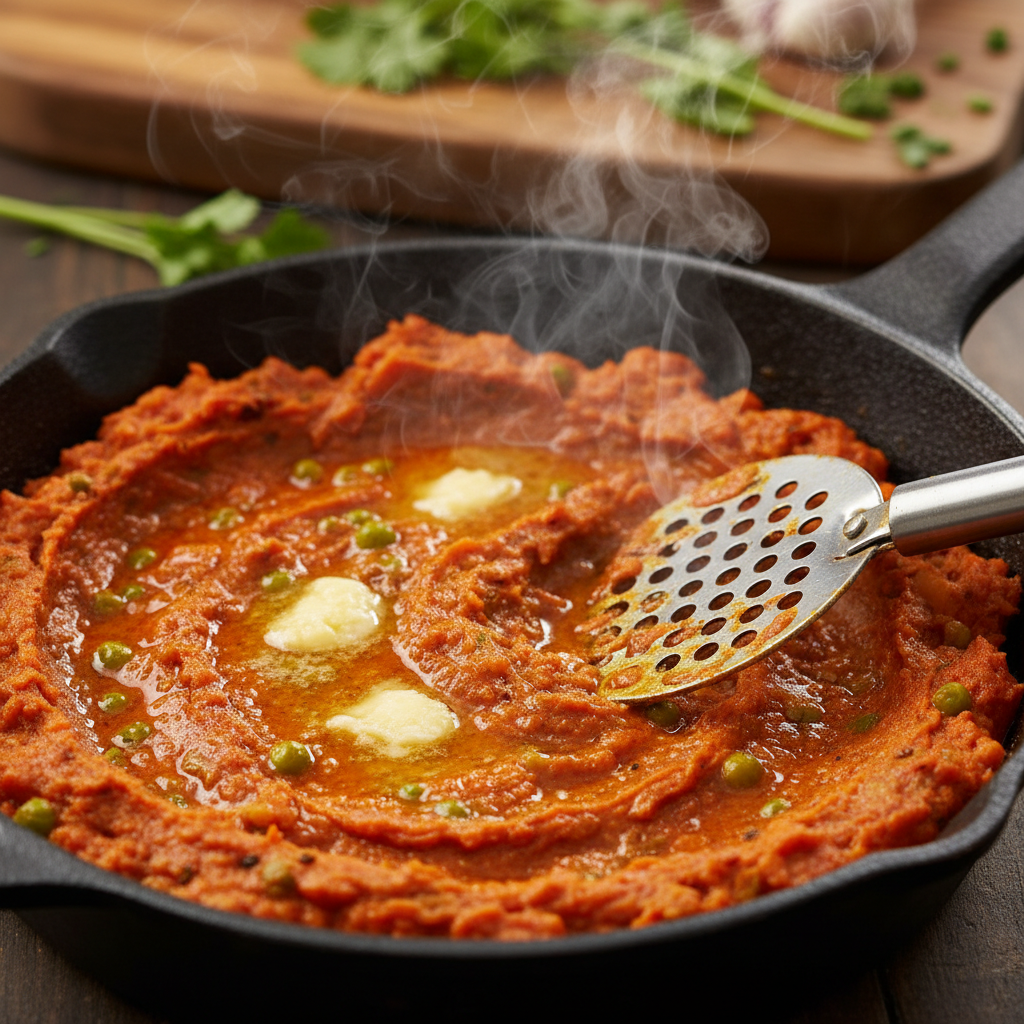
- Add boiled vegetables to the pan, then mash aggressively with a potato masher.
- Add splashes of reserved cooking liquid until it spreads easily but still looks thick, not soupy.
- Simmer 8–12 minutes, stirring and pressing. This is where the bhaji turns cohesive.
5) Finish like a cart vendor
- Add 1–2 tbsp butter, a squeeze of lemon, and chopped cilantro.
- Taste for salt and masala. If it tastes “quiet,” add a small pinch more pav bhaji masala and simmer 2 minutes.
Key point: If you want that best pav bhaji recipe mumbai street feel, don’t stop at “cooked.” Stop at “glossy, cohesive, and punchy.” The extra simmer and the finishing butter usually make the difference.
How to toast the pav like Mumbai street stalls
Great bhaji with weak bread still disappoints. The pav is half the experience, especially for U.S. rolls that start a bit taller and softer than typical pav.
- Slice rolls horizontally, keep them hinged if you like that street-style fold.
- Heat a skillet or griddle until properly hot, then add a generous smear of butter.
- Sprinkle a pinch of pav bhaji masala on the butter (optional but very “stall-like”).
- Toast cut sides until golden with crisp edges, then flip briefly for warmth.
If you’re serving a crowd, keep toasted pav in a warm oven. Avoid sealing in steam, it softens the crust.
Practical upgrades: make it taste closer to Mumbai (without overcomplicating)
These tweaks aren’t mandatory, but they often fix the “something is missing” feeling.
- Use a wider pan: More surface area means more browning, less stew.
- Add butter in two rounds: A little early for flavor, a little at the end for aroma.
- Don’t overload with random vegetables: Carrots and beets can pull the profile sweet and earthy.
- Acid at the end: Lemon right before serving lifts everything, especially if tomatoes taste muted.
- Heat level: Kashmiri chili gives color, cayenne gives bite, adjust separately.
Many home cooks also like a small pinch of sugar to balance acidity, but if you’re chasing street authenticity, add it only when tomatoes taste aggressively sour.
Common mistakes (and how to fix them fast)
- Bhaji looks pale: Add Kashmiri chili or paprika, plus a tiny bit more butter to bloom it.
- Bhaji tastes “tomato-y” but not deep: Cook the tomato-onion base longer until it reduces and darkens.
- It burns on the bottom: Heat slightly down, add a splash of cooking liquid, scrape and keep moving.
- Too spicy: Add a little mashed potato, a knob of butter, and more lemon if needed.
- Too thick: Add reserved liquid in small amounts, simmer a minute, then reassess.
According to the CDC, handwashing helps reduce the spread of germs, and it’s especially relevant here because pav bhaji often comes with raw onion and cilantro on the side. If you’re prepping toppings ahead, keep them chilled and handle with clean utensils.
Conclusion: your “street-style” target and what to do next
If you remember one thing, make it this: the street vibe comes from reduction + mashing + butter finishing, not from chasing a complicated ingredient list. Cook the base until it concentrates, bloom the masala in fat, simmer after mashing until cohesive, then toast the pav like you mean it.
Next time you cook, pick one upgrade and commit, either use a wider pan for better sear or toast the pav longer for crisp edges. Those two changes alone usually move a home batch much closer to what people mean by the best pav bhaji recipe mumbai street experience.