
best pork chop recipes oven baked usually come down to one thing: controlling heat so pork stays juicy, not chalky, while still getting that browned, savory edge people expect from a great chop.
If you have ever pulled pork chops from the oven and felt instantly disappointed, you are not alone. Many home cooks overcook because chops look “not done” until they are already dry, or they use the same timing for thin and thick cuts, which almost never works.
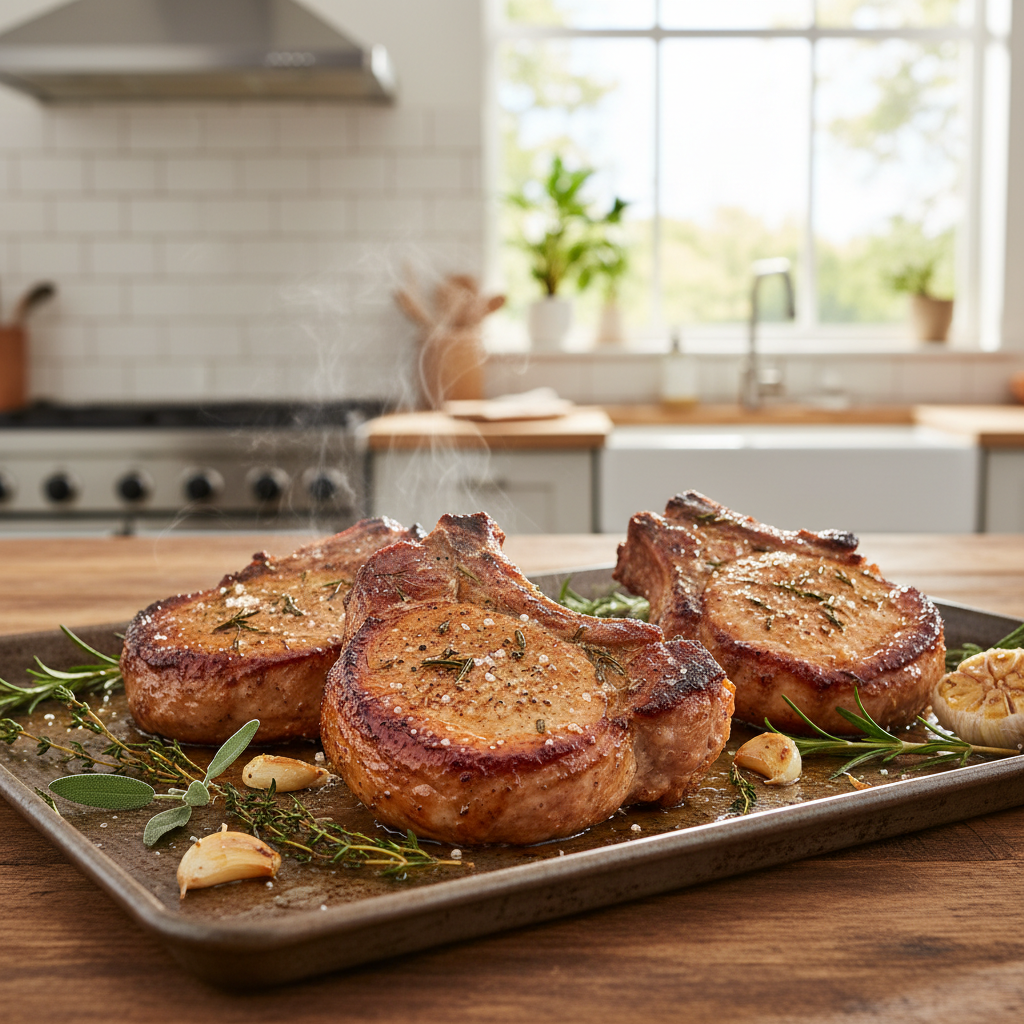
This guide keeps it practical: how to pick the right chop, the oven method that tends to work across kitchens, plus a handful of reliable flavor paths you can rotate all year. You will also get a quick timing table, a doneness checklist, and the mistakes that quietly ruin texture.
What makes oven-baked pork chops go dry (and how to avoid it)
Dry chops are usually not a “bad recipe” problem, it is a process problem. A few common culprits show up again and again.
- Overcooking past safe doneness: Pork turns from juicy to tight quickly. According to USDA Food Safety and Inspection Service (USDA FSIS), whole cuts of pork should reach 145°F and then rest 3 minutes.
- Wrong expectations for different cuts: Loin chops cook fast and dry fast, shoulder chops have more fat and are more forgiving.
- Pan not hot enough for browning: If you bake low-and-slow without a sear or high-heat finish, you often get pale chops that still overcook while you chase color.
- No rest time: Cutting immediately lets juices run out, and the bite feels drier than it needed to be.
If you want the “best pork chop recipes oven baked” experience consistently, the thermometer is not optional, it is your cheat code.
Choose your chops: thickness, bone-in vs boneless, and what to buy
Before seasoning, the cut choice already sets your margin for error.
- Thickness: Aim for 1 to 1.5 inches when possible. Thin chops can still work, but timing becomes finicky.
- Bone-in: Often stays juicier and tastes fuller. It also browns nicely near the bone.
- Boneless: Convenient and fast, but easier to overcook. Consider brining (even briefly) to help.
- Look for some fat: A small fat cap is your friend in the oven, it helps protect the meat.
One more real-world tip: if the chops vary in thickness inside the same pack, cook to temperature, not time, or you will sacrifice at least one piece.
The core method: high-heat bake + quick finish for reliable results
This is the backbone technique you can pair with multiple seasonings. It is simple, but the details matter.
Step-by-step (works for most 1 to 1.5 inch chops)
- Preheat: 425°F. Put a sheet pan inside to heat while the oven warms.
- Dry the surface: Pat chops dry, then season. Dry surfaces brown better.
- Oil lightly: A thin film of neutral oil (or avocado oil) helps browning and prevents sticking.
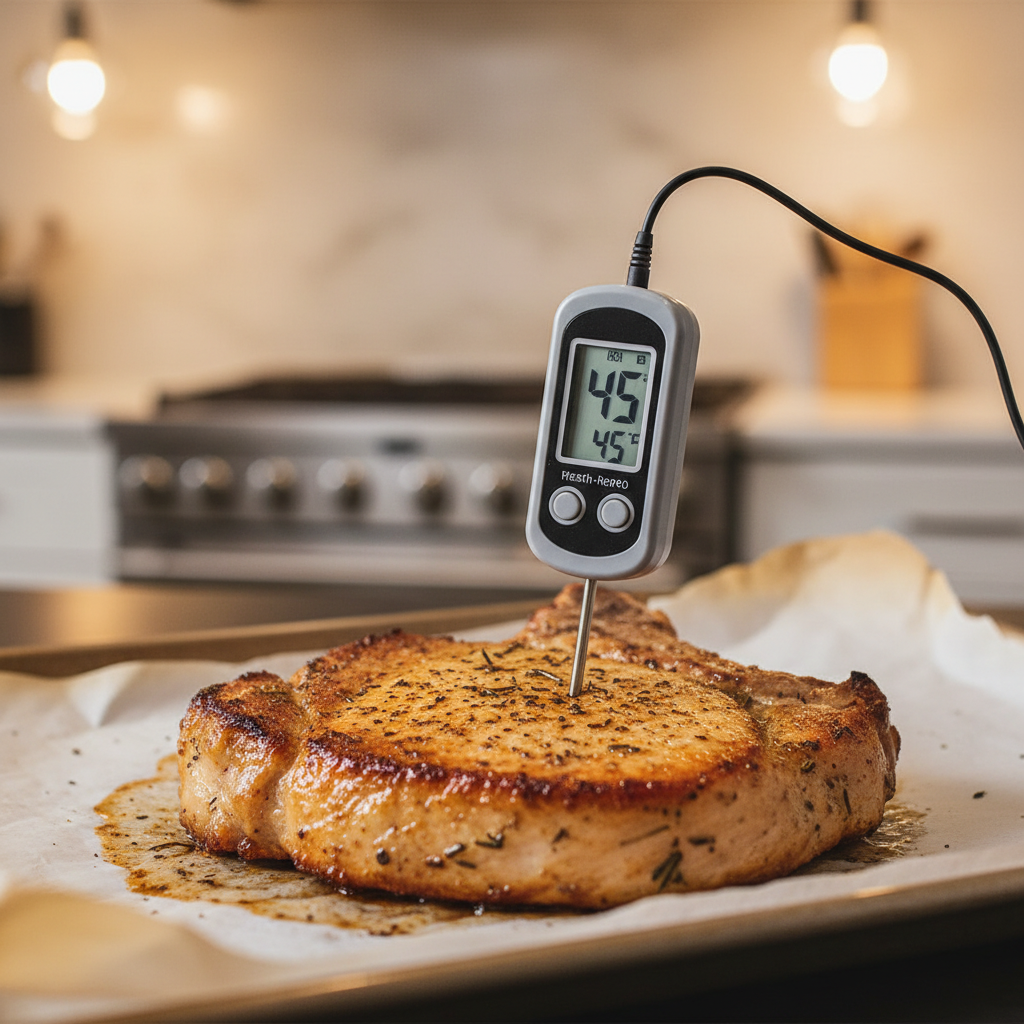
- Bake: Place chops on the hot pan, bake until the thickest part reaches 140–143°F.
- Finish: Rest 3–5 minutes. Carryover heat typically takes you to around 145°F.
If you want more crust, switch the oven to broil for the last 1–2 minutes, but watch closely because broilers vary a lot.
Timing and temperature cheat sheet (use as a starting point)
Ovens run differently, and pork chop shape varies, so treat this as a baseline. The goal is always the same: pull before final temp, then rest.
| Chop type | Thickness | Oven temp | Estimated bake time | Pull temp |
|---|---|---|---|---|
| Boneless loin | 3/4 inch | 425°F | 10–14 min | 138–140°F |
| Boneless loin | 1 inch | 425°F | 14–18 min | 140–143°F |
| Bone-in rib or center-cut | 1 inch | 425°F | 16–20 min | 140–143°F |
| Bone-in rib or center-cut | 1.5 inch | 425°F | 22–28 min | 140–143°F |
Key point: Carryover cooking during rest is real, especially with thicker, bone-in chops on a hot pan.
Best oven baked pork chop recipe styles (rotate these all year)
Instead of throwing 12 full recipes at you, here are a few proven “flavor tracks” that behave well in the oven. Pick one based on mood and pantry.
1) Classic garlic-herb butter (weeknight safe)
- Season with kosher salt, black pepper, garlic powder.
- After baking, top with a small pat of butter mixed with minced parsley and a squeeze of lemon.
- Works best when you let the butter melt during the rest.
2) Dijon-maple pan glaze (sweet-savory without being sticky)
- Whisk Dijon mustard + maple syrup + a splash of apple cider vinegar.
- Brush on during the last 3–5 minutes so sugars do not burn early.
- Finish with cracked pepper for bite.
3) Crispy Parmesan breadcrumb (for people who miss fried)
- Coat lightly with mayo or Greek yogurt, then press into panko + Parmesan + paprika.
- Bake on a rack set over a sheet pan for better airflow.
- Broil briefly at the end for color, watch constantly.
4) Smoky BBQ rub (great for meal prep)
- Rub with brown sugar, smoked paprika, chili powder, salt.
- Skip sauce until after cooking, sauce can hide overcooked texture and also burn.
- Serve with slaw or roasted sweet potatoes.
These are the profiles I see people return to because they are flexible. You can still call them “best pork chop recipes oven baked” as long as you honor the temperature and rest.
Quick self-check: are your chops on track while cooking?
Mid-cook anxiety causes most overcooking. Use these cues to stay calm and correct course.
- Color: Light golden edges are enough, deep brown is nice but not mandatory.
- Touch: Firm but not hard. If it feels like the palm below your thumb when you make a relaxed fist, you are close.
- Thermometer placement: Thickest part, not touching bone, not in a fat seam.
- Juices: A little moisture on the surface is normal, but if juices flood the pan early, heat may be too high or chops may be too thin.
Practical add-ons: brining, marinades, and sides that actually help
If you want more forgiveness, add one of these, but keep it realistic for weeknights.
Fast brine (helps boneless chops most)
- Mix 4 cups water + 3 tbsp kosher salt, stir to dissolve.
- Soak 30–60 minutes in the fridge, then pat dry extremely well.
- Season after drying, the surface still needs flavor.
Marinade rule of thumb
- Avoid heavy sugar marinades at high heat, they burn.
- Acidic marinades can make the surface mushy if left too long, many kitchens cap it around a few hours.
Sides that match oven timing
- Roasted broccoli or asparagus: goes in late, similar timeline to chops.
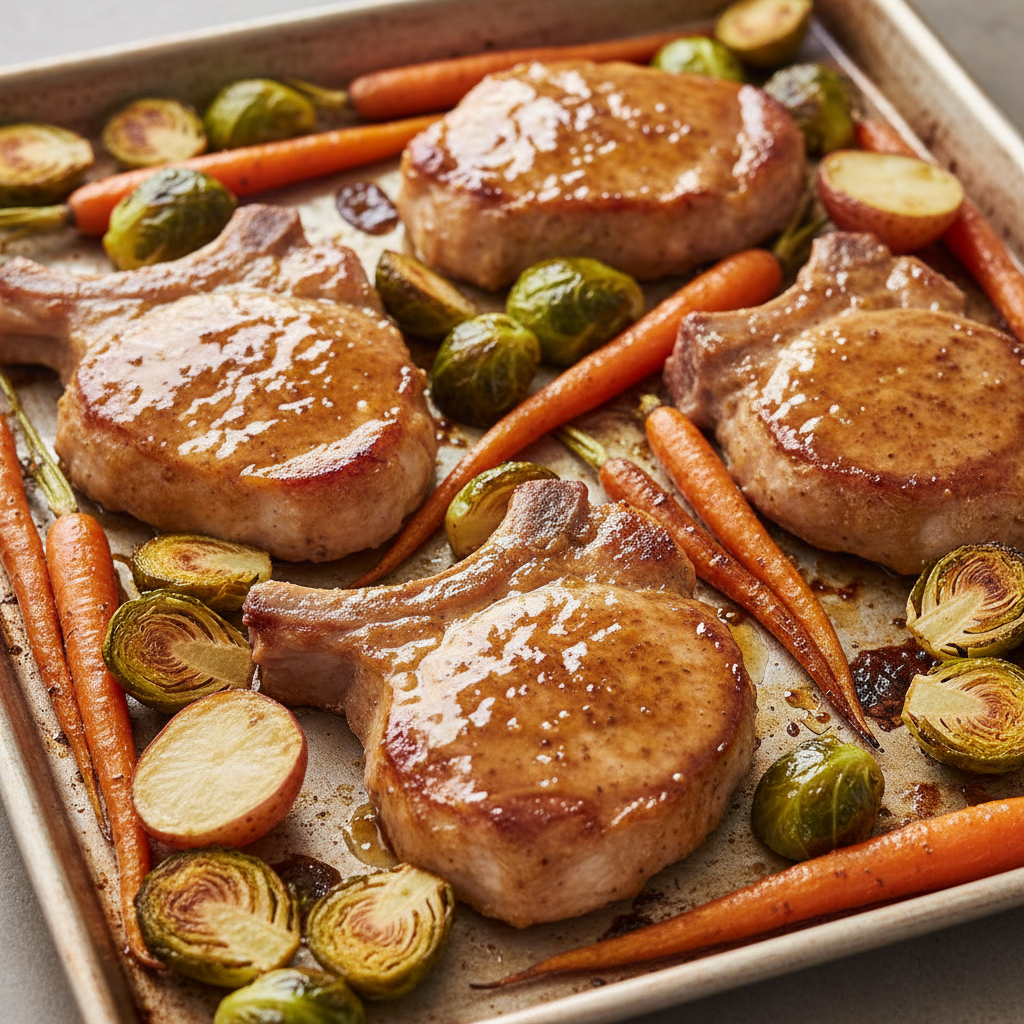
- Sheet pan potatoes: start early, then add chops halfway through.
- Simple salad: saves oven space, also cuts richness.
Common mistakes (the ones that feel harmless)
- Skipping the preheated pan: You lose browning and end up cooking longer for color.
- Relying on “clear juices”: Not a reliable doneness test in modern pork.
- Cooking straight from the fridge: Not always a disaster, but it can make timing less predictable and encourages overcooking.
- Too much seasoning too early with wet rubs: Wet surfaces steam, and you get pale meat.
Key takeaway: If you fix only one thing, fix your endpoint temperature. Everything else is a bonus.
When to be extra cautious (food safety and special situations)
If you are cooking for someone pregnant, immunocompromised, or with specific health concerns, it is smart to be conservative and consult a qualified professional for personalized guidance. For general home cooking, follow the USDA FSIS guidance on pork minimum internal temperature and rest time.
Also, if your oven is known to run hot or cold, an inexpensive oven thermometer can help you avoid the “why is this always dry” loop.
Conclusion: how to make this your go-to dinner, not a one-off win
The best oven route is not complicated, it is consistent: buy thick enough chops, bake hot on a preheated pan, pull at the right temperature, then rest. Once that becomes automatic, the flavor options start to feel endless, and best pork chop recipes oven baked stops being a search term and becomes a reliable weeknight.
Action ideas for tonight: pick one flavor track above, use a thermometer, and write down your pull temp and total time so your next round feels even easier.
FAQ
What oven temperature is best for baking pork chops?
Many home kitchens get good results around 425°F because it browns quickly without a long dry-out window, but thickness and your oven’s accuracy matter.
How do I keep oven baked pork chops from drying out?
Cook to temperature, not just time, and rest after baking. A short brine can help, especially for lean boneless chops.
Is it better to bake pork chops covered or uncovered?
Uncovered tends to brown better. Covered cooking can trap steam, which sometimes makes chops pale and encourages longer cook times.
Can pork chops be slightly pink in the middle?
Yes, in many cases a slight blush can happen even at safe temperatures. Use an instant-read thermometer and follow USDA FSIS guidance for doneness.
Should I sear pork chops before baking?
Searing adds flavor and color, but it is not required if you use a hot oven and a preheated pan. If you do sear, shorten oven time and still cook to temp.
What are the best seasonings for baked pork chops?
Garlic, black pepper, paprika, and herbs are reliable. If you use sweet glazes like maple or BBQ sauce, apply late so they do not burn.
How long do baked pork chops last in the fridge?
Storage depends on handling and fridge temperature, but many people aim to eat cooked leftovers within a few days. When in doubt, follow food safety guidance and discard anything questionable.
If you are trying to build a small rotation of weeknight dinners, start by dialing in one method and two flavor tracks, then you can swap sides and sauces without relearning timing every time.