
If you’re searching how to make thukpa soup tibetan easy, the simplest approach is to treat thukpa as a flexible noodle soup with a clear, spiced broth, a handful of vegetables, and a protein you actually like.
A lot of recipes make thukpa sound “authentic” only if you track down hard-to-find items, but in most American kitchens, the real win is learning the structure: broth + aromatics + noodles + add-ins, then adjust salt and heat at the end.
In this guide, you’ll get a practical version that stays true to the spirit of Tibetan thukpa: warming, savory, slightly spiced, and built for weeknights. I’ll also flag the common spots where people end up with bland broth, mushy noodles, or overcooked veg, and how to avoid that.
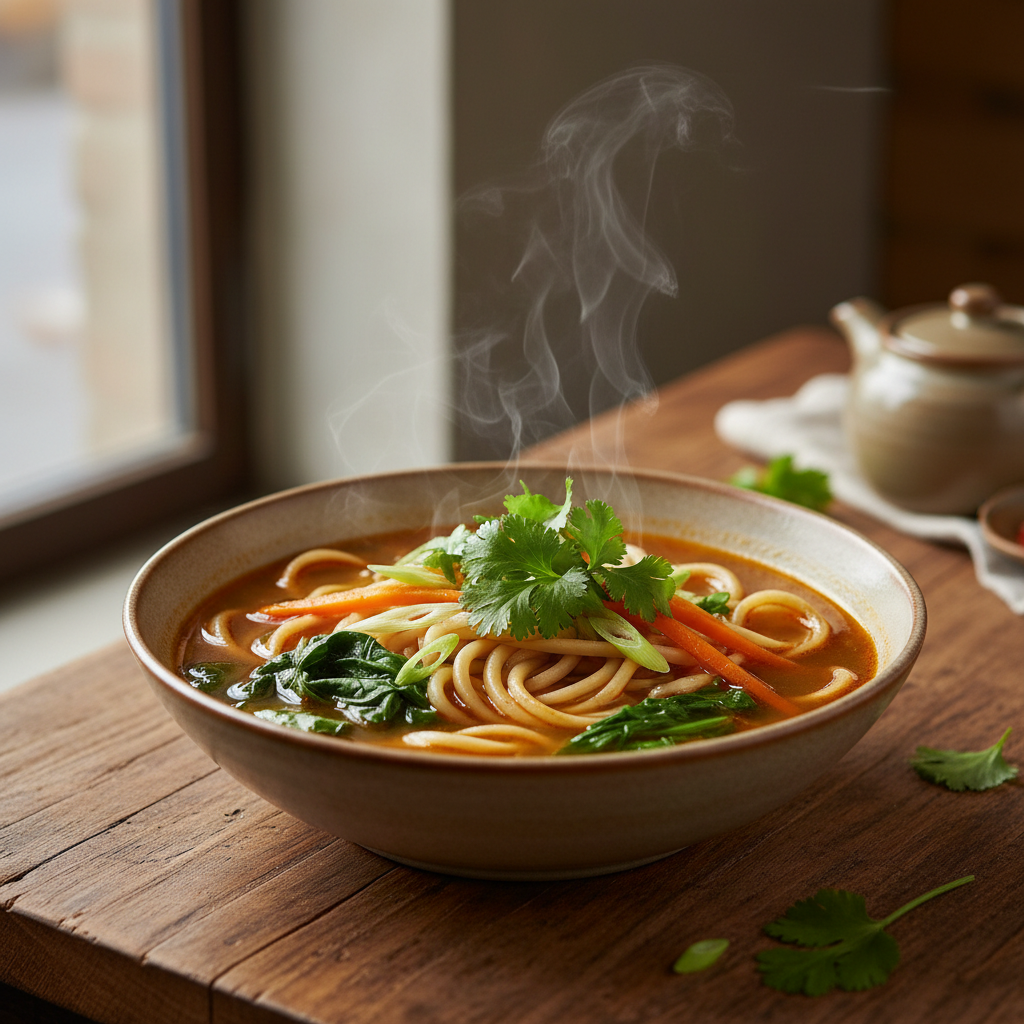
What “easy Tibetan thukpa” really means in a US kitchen
Thukpa varies by household and region, so “easy” usually means using ingredients you can find at a standard US grocery store while keeping the soup’s core character: a light but flavorful broth, gentle spice, and noodles that still have bite.
Think of this as a weeknight template rather than a museum piece. You can swap chicken for tofu, spinach for bok choy, spaghetti for wheat noodles, and it still reads as thukpa because the method stays consistent.
- Broth backbone: chicken or veggie stock, boosted with aromatics
- Warming notes: ginger, garlic, black pepper, optional chili
- Body: noodles plus one protein and two vegetables
- Finish: acid and herbs to wake everything up
According to the USDA, cooked poultry should reach 165°F for food safety, so if you’re using chicken, a quick thermometer check keeps this “easy” in the right way.
Ingredients: a practical shopping list (with smart swaps)
You can make a satisfying pot with pantry staples, then add one or two “nice-to-have” items if you already keep them around.
Core ingredients (serves 4)
- 2 tbsp neutral oil (or ghee if you like the flavor)
- 1 medium onion, thin-sliced
- 4 cloves garlic, minced
- 1 tbsp fresh ginger, grated
- 6 cups chicken stock or vegetable stock
- 2 tbsp soy sauce (or tamari)
- 1 tsp ground cumin
- 1/2 tsp ground coriander (optional but helpful)
- 1/2 tsp black pepper, plus more to finish
- 1–2 cups cooked protein: shredded chicken, ground turkey, tofu, or a couple eggs
- 2 cups mixed vegetables: carrots, mushrooms, cabbage, spinach, bok choy, peas
- 8 oz noodles: wheat noodles, ramen, rice noodles, or even thin spaghetti
- 1–2 tbsp lemon juice or rice vinegar
- Salt to taste
Optional upgrades (only if you have them)
- Chili crisp or chili oil for heat and aroma
- Sesame oil (a few drops at the end, not at the start)
- Fresh cilantro and scallions for a brighter finish
If your goal is how to make thukpa soup tibetan easy without extra shopping, prioritize onion, garlic, ginger, stock, noodles, and one vegetable you enjoy. Everything else is tuning.
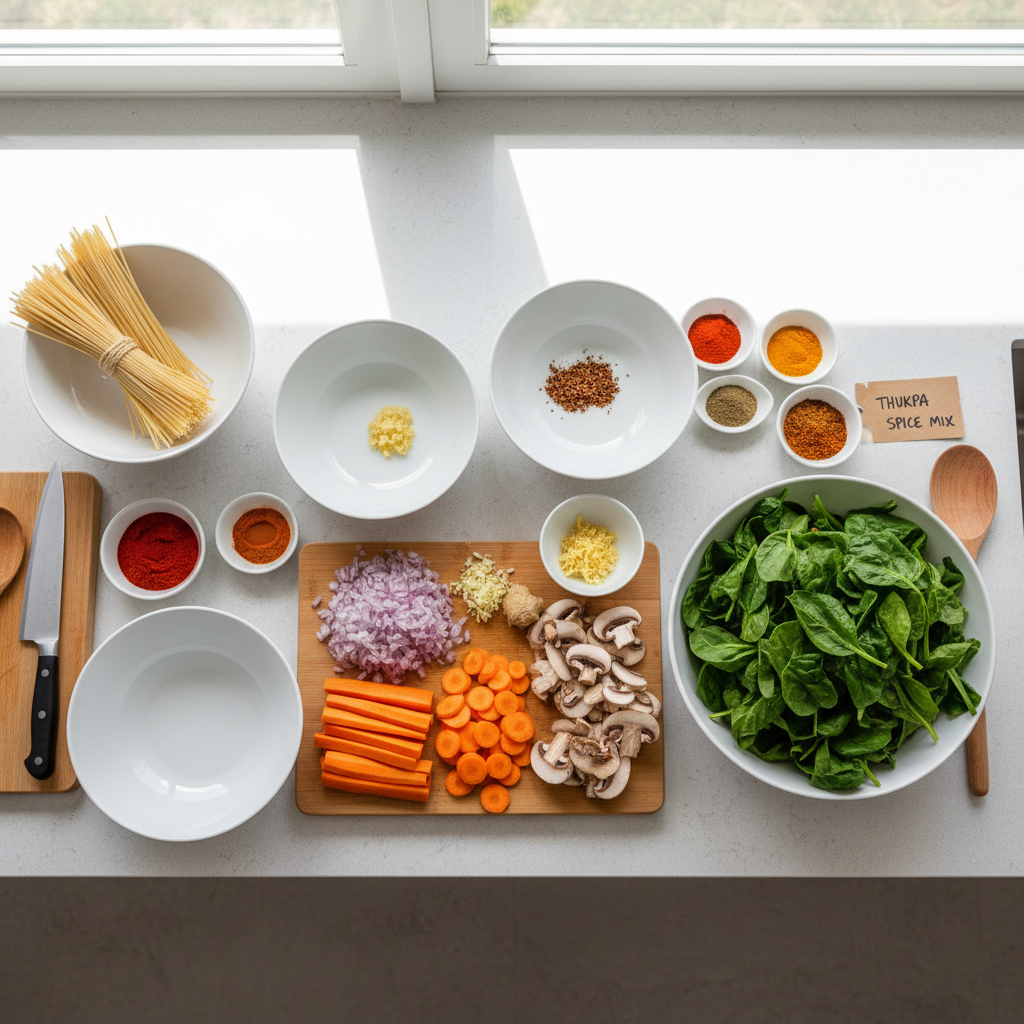
Step-by-step: how to make thukpa soup (the easy method)
This is the version that works on a weeknight, keeps the broth flavorful, and avoids the two classic issues: watery soup and overcooked noodles.
1) Build flavor in the pot (8–10 minutes)
- Heat oil in a large pot over medium heat.
- Add onion with a pinch of salt, cook until softened and lightly golden.
- Add garlic and ginger, stir 30–60 seconds until fragrant.
- Stir in cumin, coriander, and black pepper for 20–30 seconds to bloom the spices.
2) Simmer the broth (10 minutes)
- Pour in stock and soy sauce.
- Bring to a gentle simmer, then keep it there for about 10 minutes.
That simmer time matters more than people expect, it’s where “pretty good” becomes “I want a second bowl.”
3) Cook vegetables in the right order (5–8 minutes)
- Add firm vegetables first (carrots, cabbage, mushrooms).
- Add quick-cooking greens (spinach, bok choy) in the last 1–2 minutes.
4) Noodles: the easiest way to avoid mush
If you’re serving right away, cook noodles in the soup. If you expect leftovers, cook noodles separately, then add to bowls so they don’t swell and turn soft overnight.
- Cook-in-pot: add noodles and cook to just shy of done
- Meal-prep: boil noodles separately, rinse, portion, then ladle soup over
5) Add protein, then finish with acid (2 minutes)
- Stir in cooked chicken/tofu, or crack in eggs and gently stir for ribbons.
- Turn off heat, add lemon juice or rice vinegar.
- Taste, then adjust salt and pepper.
Acid at the end is a small move that makes the whole pot taste more “alive,” especially if you’re using boxed broth.
Quick self-check: why your thukpa tastes “flat” (and the fastest fixes)
When people say their soup “needs something,” it’s usually one of these, not a mystery spice.
- Not enough simmer time: give the broth 10 more minutes at a gentle simmer.
- Under-seasoned stock: add salt in small pinches, taste each time.
- No brightness: add lemon juice or vinegar, a teaspoon at a time.
- Missing aroma: finish with scallions, cilantro, or a few drops sesame oil.
- Too heavy: thin with a splash of water, then re-adjust salt.
This checklist is also why how to make thukpa soup tibetan easy is mostly about technique, the ingredient list can stay simple.
Timing and portions: a simple plan (plus a table)
If you want this to land on the table without stress, treat it like a 35–45 minute soup, with vegetables and noodles as the only “timing-sensitive” parts.
| Component | Recommended option | Why it helps | Time |
|---|---|---|---|
| Broth base | Chicken or veggie stock + aromatics | Fast flavor without long simmer | 10–20 min |
| Protein | Shredded rotisserie chicken or tofu | No extra cooking step | 2–5 min |
| Vegetables | Carrot + mushrooms + spinach | Good texture contrast | 5–8 min |
| Noodles | Ramen, wheat noodles, rice noodles | Easy to find, quick cook | 3–8 min |
| Finishing | Lemon/vinegar + herbs | Prevents blandness | 1–2 min |
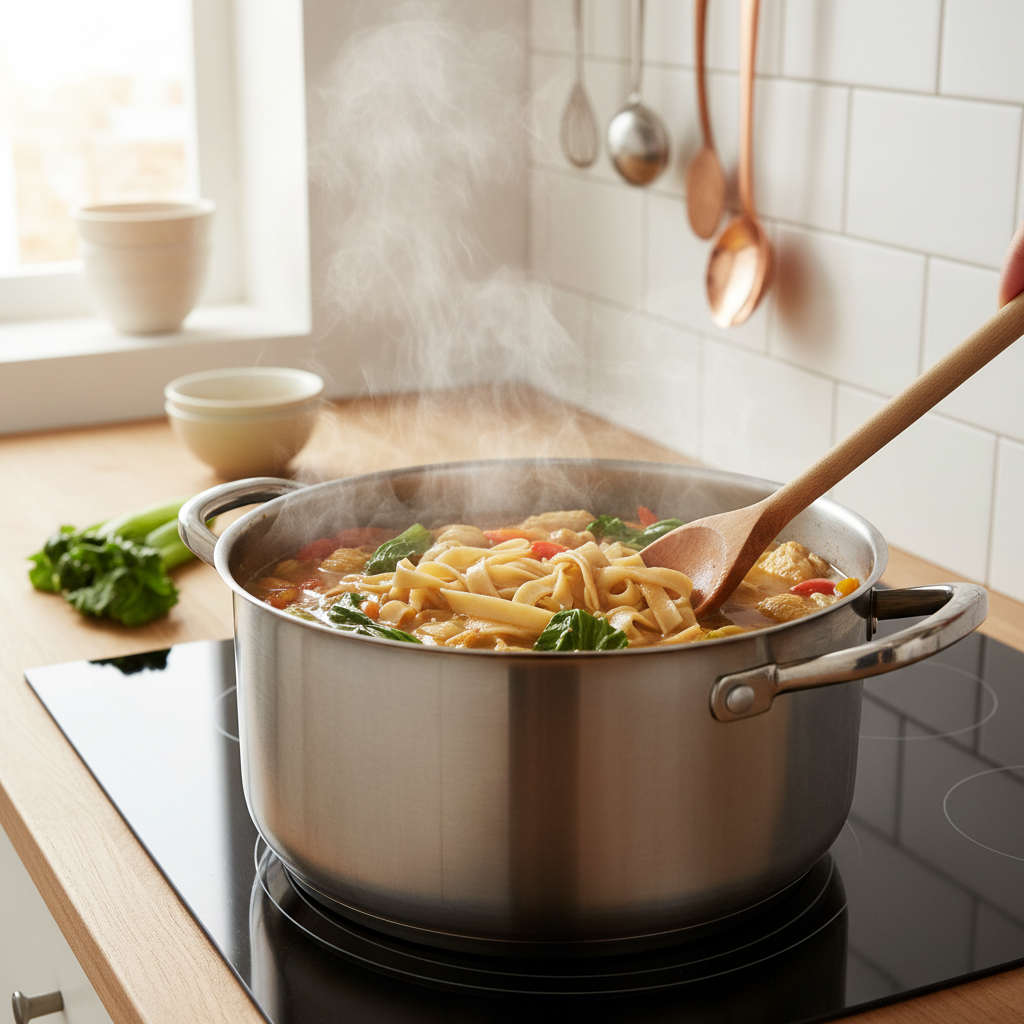
Practical variations (so you can make it with what you have)
Once you know the base method, thukpa becomes a “use what’s in the fridge” soup, which is honestly how many people prefer to cook day to day.
Easy chicken thukpa
- Use shredded rotisserie chicken, add it near the end so it stays tender.
- If you want more depth, simmer a few chicken bones in the stock for 15–20 minutes, then strain.
Vegetarian or vegan thukpa
- Use vegetable stock plus mushrooms for savory depth.
- Add tofu cubes, or stir in white beans for extra body.
- Finish with lemon and scallions, vegan soups often need that lift.
Spicy, warmer bowl
- Add chili flakes with the spices, or finish with chili crisp.
- If you’re sensitive to heat, start small, you can always add more in the bowl.
If your main goal stays how to make thukpa soup tibetan easy, keep the swaps simple: don’t change protein, noodles, and vegetables all at once, or it’s harder to balance the soup.
Common mistakes (and how to avoid them without overthinking)
- Boiling too hard: a rolling boil can make broth taste harsher and can break noodles, keep a gentle simmer.
- Adding greens too early: spinach turns dull and soft, add late.
- Seasoning only once: taste after simmer, after vegetables, and after noodles if cooked in pot.
- Overdoing sesame oil: treat it like perfume, a few drops, not a pour.
- Leftovers turning thick: store noodles separately, or add extra broth when reheating.
According to the CDC, leftover soups are generally safer when refrigerated promptly in shallow containers and reheated thoroughly, if you’re meal-prepping this, that habit matters.
Key takeaways (the parts worth remembering)
- Simmer the broth long enough for aromatics to do their job.
- Cook vegetables in stages so you keep texture.
- Protect noodle texture by cooking separately when planning leftovers.
- Finish with acid to prevent bland soup.
Conclusion: your next pot will taste better than your first
Most people don’t struggle with how to make thukpa soup tibetan easy because it’s complicated, they struggle because soup depends on small adjustments, simmer time, salt, and that final splash of acid. Get those right and the rest becomes forgiving.
Make this once as written, then next time change only one thing, different noodles or a different vegetable, and you’ll dial in a version that fits your kitchen and your week.
If you want a simple action step, prep a small “thukpa kit” in your pantry: stock, noodles, soy sauce, cumin, and chili flakes, then you’re never far from a warm bowl.
FAQ
Can I make thukpa soup with ramen noodles?
Yes, ramen noodles work well and cook fast. If the seasoning packet is very salty, skip it and season the broth yourself so the soup stays balanced.
What’s the best way to keep noodles from getting soggy?
Cook noodles separately if you expect leftovers, then store them apart from the broth. When you reheat, combine in the bowl, not in the pot.
Is thukpa supposed to be spicy?
It can be, but it doesn’t have to be. Many versions lean warming rather than fiery, so it’s normal to keep spice optional and add chili at the table.
What vegetables work best in an easy thukpa?
Carrots, mushrooms, cabbage, spinach, and bok choy are reliable because they hold texture and taste good in broth. Use what you like, but add greens late.
Can I make this gluten-free?
Usually yes by using rice noodles and tamari instead of regular soy sauce, but check labels because brands vary. If you have dietary concerns, a registered dietitian can help tailor choices.
How do I add more flavor without making it salty?
Try longer simmer time, more ginger/garlic, a pinch more spice, and finish with lemon juice. Those moves increase perceived flavor without relying only on salt.
How long does thukpa soup last in the fridge?
Many home cooks keep it for a few days, especially if noodles are stored separately, but food safety depends on storage temperature and handling. When in doubt, follow USDA guidance and reheat thoroughly.
If you’re the kind of cook who wants a more plug-and-play routine, it may help to write your preferred combo down as a “default bowl” so you can repeat it without thinking, then tweak only the toppings when you want variety.