
how to make tikki recipe aloo crispy comes down to a few unglamorous details: dry potatoes, the right binder, and patient pan heat, not extra flour thrown in at the end.
If you have ever bitten into aloo tikki that looked golden but turned out soft, greasy, or broke apart in the skillet, you are not alone. In many kitchens, the issue is not the spice mix, it is moisture control and how the patty sets before it hits the oil.
This guide keeps it practical, with a quick troubleshooting table, a shaping checklist, and a method that works well with typical US grocery ingredients. I will also flag the common shortcuts that usually backfire, because crispy outside plus tender inside is a balance, not a coincidence.
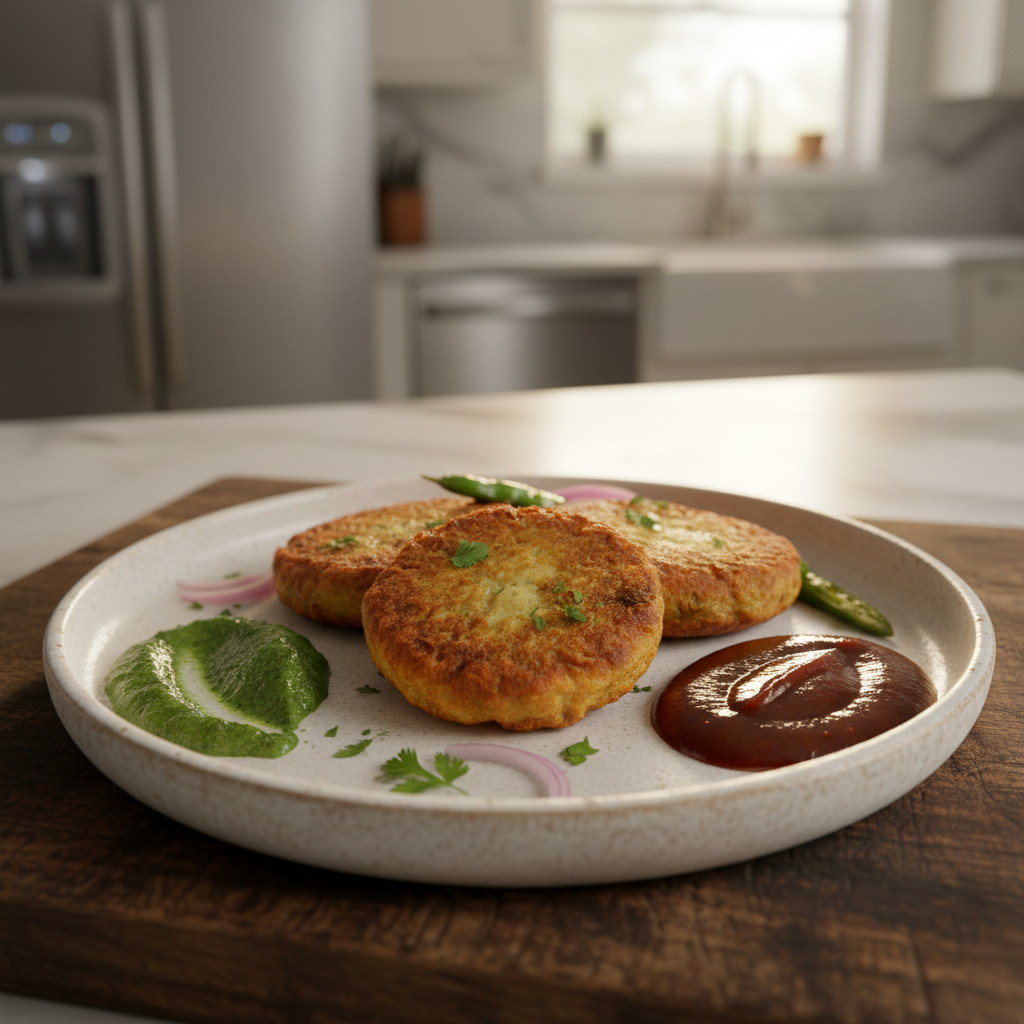
What makes aloo tikki crispy (and what usually ruins it)
Crispiness is mostly about water and surface starch. Potatoes hold a lot of moisture, and when that moisture turns to steam in hot oil, it can soften the crust or crack the patty.
- Too-wet potatoes: boiling them in a lot of water, peeling too early, or mashing while steamy can trap moisture.
- Overworking the mash: a gluey texture turns the patty dense inside and fragile at the edges.
- Weak binding: if you rely on “more oil” to hold things together, the patty often absorbs oil instead.
- Pan not hot enough: low heat makes the crust form slowly, which invites sticking and oiliness.
- Flipping too soon: you need a set crust before turning, otherwise it tears and leaks moisture.
According to USDA Food Safety and Inspection Service (FSIS), cooked potatoes should be kept out of the temperature danger zone as much as possible. Practically, for tikki, that means cool potatoes quickly and do not leave mashed potato mixture sitting warm for long.
Ingredients: simple list, smarter choices
You can make excellent tikki with basic pantry spices. The more important choice is how you bind and how you add dry texture without making the center bready.
Core ingredients (about 8 medium patties)
- 2 lb Yukon Gold or russet potatoes
- 1 tsp kosher salt (plus more to taste)
- 1 tsp cumin seeds (optional but classic)
- 1 to 2 green chilies, finely chopped (optional)
- 2 tbsp cilantro, chopped
- 1 tsp grated ginger
- 1 tsp garam masala
- 1/2 tsp ground coriander
- 1/2 tsp amchur (dry mango powder) or 2 tsp lemon juice
- 2 to 4 tbsp cornstarch or rice flour (binder, adjust by feel)
- Neutral oil (avocado, canola, grapeseed) for shallow frying
Optional add-ins that help crisp
- Soaked poha (flattened rice), squeezed dry: adds light texture without heaviness
- Fine breadcrumbs: useful when potatoes are very moist, but can dull the potato flavor if overused
- Peas, grated carrot, or corn: tasty, but they add moisture, so keep amounts modest
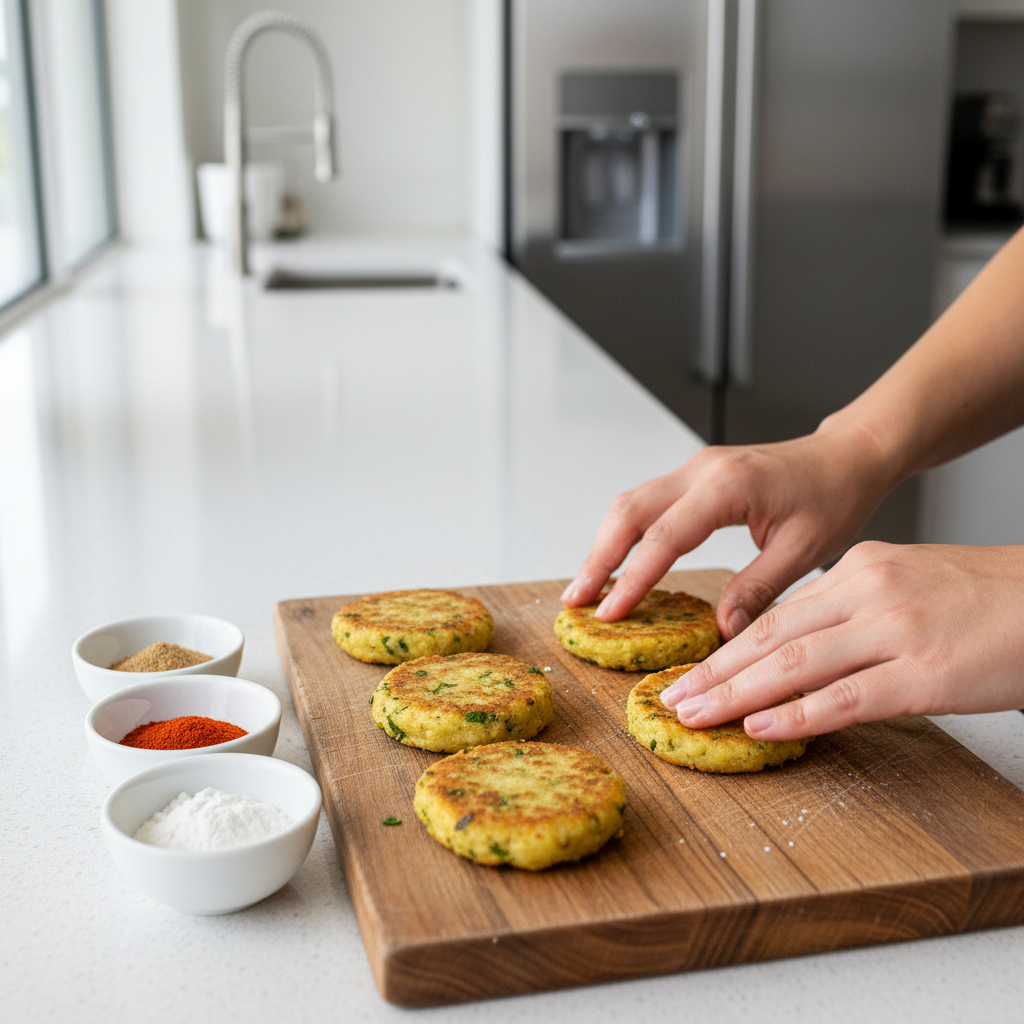
Quick troubleshooting table (so you can fix your batch)
If you want the “why is it not crisp” answer fast, use this table before you change the whole recipe.
| Problem | Likely cause | Fix next time |
|---|---|---|
| Soft outside, pale color | Pan not hot enough, too much moisture | Preheat longer, dry potatoes better, add cornstarch |
| Greasy, heavy tikki | Oil too cool, crowded pan | Fry in batches, keep medium-high heat steady |
| Patty cracks or breaks | Too dry or under-bound, flipped early | Add 1 tbsp binder, press firmly, wait for crust before turning |
| Sticks to skillet | Pan not seasoned, crust not set | Use nonstick/cast iron, add a thin oil film, do not move early |
| Crisp outside, gummy inside | Over-mashed potatoes, thick patties | Mash gently, keep patties thinner, cook slightly longer on lower heat after browning |
Step-by-step: how to make aloo tikki crispy at home
how to make tikki recipe aloo crispy is mostly prep, then calm frying. Give yourself time for cooling, it pays off.
1) Cook potatoes in a way that keeps them dry
- Best option: steam or pressure-cook whole potatoes with skins on.
- If boiling, start in cold water, cook until just tender, then drain very well.
- Let potatoes sit uncovered 10 to 15 minutes so surface steam escapes.
2) Peel, then mash lightly
- Peel while warm, not piping hot.
- Mash with a potato masher or fork, stop when mostly smooth.
- Avoid food processors, they often turn potatoes gluey.
3) Season, then add binder gradually
- Mix salt, spices, ginger, chilies, cilantro.
- Add 2 tbsp cornstarch or rice flour, mix gently.
- If the mixture still feels sticky and wet, add 1 tbsp more, then reassess.
4) Shape and chill
- Portion into balls, then press into 1/2 to 3/4-inch thick patties.
- Press edges so they are tight, cracks invite oil and steam leaks.
- Chill 20 to 30 minutes for cleaner frying.
5) Shallow-fry with steady heat
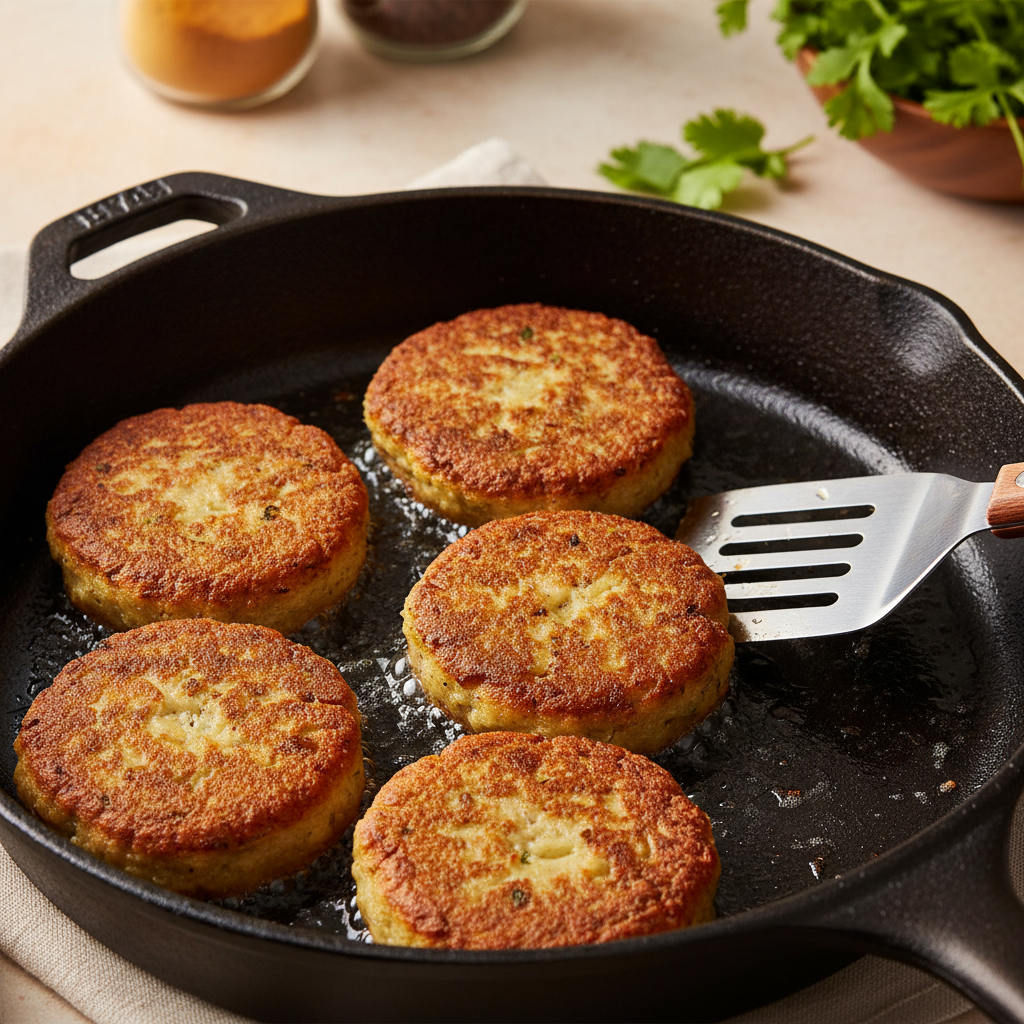
- Heat a skillet over medium-high, add a thin layer of oil.
- Place patties with space between them.
- Cook 3 to 5 minutes per side, until deep golden.
- Only flip when the bottom releases easily, do not pry aggressively.
Key point: once both sides brown, you can lower heat for 1 to 2 minutes to warm the center without darkening the crust too much.
A simple self-check checklist before frying
Many “mystery failures” show up right here, before the pan even heats.
- Mixture feels cool, not warm in your hands
- When you press a patty, edges stay smooth, not crumbly
- Surface looks matte, not wet or shiny
- Patty lifts from the board cleanly
- You can slide a spatula under a test patty after 2 to 3 minutes without tearing
If you fail two or more checks, pause and fix the mixture, add a bit more binder, chill longer, or both.
Common mistakes (even good cooks make these)
This part stings a bit, because most of these come from trying to be efficient.
- Mashing hot potatoes and immediately shaping: steam gets trapped, then the patty sweats in the pan.
- Adding too much flour: it can make a hard shell but a pasty center, and the potato flavor fades.
- Crowding the skillet: temperature drops, crust forms slowly, oil absorption goes up.
- Constant flipping: you end up scraping instead of searing.
- Using extra-virgin olive oil: flavor can clash, and smoke point can be limiting for higher-heat frying.
According to FDA guidance on cooking oils and safe food handling, controlling heat helps reduce smoking and off flavors. In practice, pick a neutral oil and keep heat steady rather than cranking it to “max” after the first batch.
Variations for US kitchens: air fryer, oven, and make-ahead
how to make tikki recipe aloo crispy is easiest on the stovetop, but you can still get good results with other methods if you accept small trade-offs.
Air fryer method
- Preheat to 400°F.
- Brush or spray patties lightly with oil.
- Air fry 10 to 14 minutes, flipping once, until browned.
You may get a drier crunch than pan-frying, so serve with chutney or yogurt sauce.
Oven method
- Heat oven to 425°F, place a sheet pan inside to preheat.
- Oil the hot pan lightly, add patties.
- Bake 12 to 18 minutes, flip once.
Make-ahead and freezing
- Shape patties, chill on a tray, then freeze until firm.
- Transfer to a freezer bag with parchment between layers.
- Cook from frozen on medium heat a bit longer, avoid high heat that browns before the center warms.
For food safety, if you are serving guests with dietary needs, label fillings and allergens, and when in doubt, consult a qualified professional.
Key takeaways and your next move
If your goal is restaurant-style crust, focus less on “secret spices” and more on technique: dry potato, gentle mash, enough binder, and heat you trust. That combination usually makes the difference between a soft patty and a crisp tikki you can actually pick up.
Try one small change first, chilling the shaped patties, then adjust binder by feel on the next batch. Once you lock in your potato moisture level, the rest becomes repeatable.
Action idea: make a double batch, freeze half as shaped patties, and you will have a fast snack option that still tastes fresh when cooked right.