
Chicken fajitas easy is really about two things: getting juicy chicken and keeping the peppers and onions crisp-tender, all without turning dinner into a project. This skillet version does both, and it stays flexible if you’re working with whatever’s in your fridge.
If you’ve tried fajitas at home and felt underwhelmed, it’s usually not your fault, it’s the process. Crowded pans steam food instead of searing it, seasoning goes on too late, or the chicken gets overcooked while you wait for vegetables to soften.
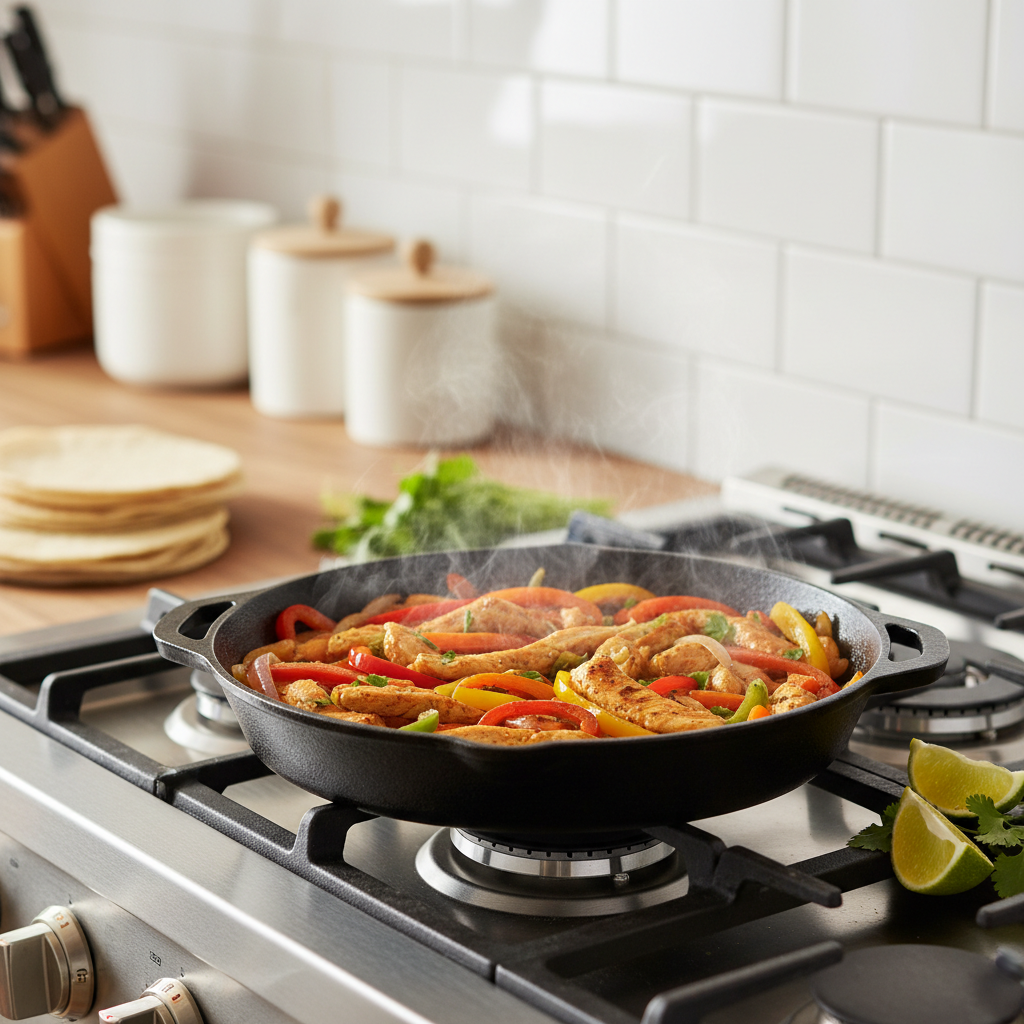
Below you’ll get a practical method, a timing plan, and small choices that make a big difference, like when to salt, how to cut, and how to finish so the pan tastes like a restaurant fajita plate.
What makes fajitas “easy” (and what usually goes wrong)
Easy doesn’t mean bland or shortcuts that backfire, it means a method that tolerates real-life cooking. The most common pain points show up in the same places.
- Chicken turns dry because it’s cut too small, cooked too long, or added before the pan gets hot enough to brown.
- Vegetables go soft and watery when the skillet is crowded, or the salt hits too early and pulls moisture out.
- Flavor tastes “flat” when seasoning doesn’t bloom in oil, or acid (lime) goes in too soon and dulls the sear.
- Tortillas tear or feel stale because they’re not warmed properly, or they sit uncovered while you cook.
The fix is simple: cook in the right order, use high heat in short bursts, and season with intention. This is why a chicken fajitas easy skillet works so well, you’re controlling the pan instead of reacting to it.
Ingredients and smart swaps (so you don’t have to shop twice)
You can keep this classic or tweak it for what you already have. The key is balancing salty, smoky, and bright.
Core ingredients
- Chicken: boneless skinless thighs (more forgiving) or breasts (leaner, cook carefully)
- Bell peppers: mix colors for sweetness and contrast
- Onion: yellow or red
- Oil: avocado, canola, or light olive oil for higher-heat cooking
- Lime + cilantro (optional): finishers that make it taste “done”
- Tortillas: flour for softness, corn for more traditional flavor
Seasoning options
- Store-bought fajita seasoning (check sodium if that matters for you)
- DIY blend: chili powder, cumin, smoked paprika, garlic powder, oregano, black pepper, salt
According to USDA Food Safety and Inspection Service (USDA FSIS), raw poultry should be handled to avoid cross-contamination, keep a separate cutting board, wash hands, and cook chicken to a safe internal temperature.
Quick self-check: which path should you follow tonight?
If you want chicken fajitas easy results, decide your constraints first, it changes the cooking order and how aggressive you can be with heat.
- You need dinner in 20 minutes: use thin-sliced chicken breast, cook chicken first, veggies second, combine at the end.
- You want the juiciest chicken: use thighs, don’t cut too thin, and rest the meat briefly before slicing.
- You hate washing dishes: keep it one skillet, warm tortillas directly over a burner or in the same pan after cooking.
- You’re cooking for picky eaters: keep heat low on spice, serve salsa and hot sauce at the table.
- You’re watching sodium: use a DIY blend, add salt gradually, let lime do more of the “pop.”
Easy Chicken Fajitas Recipe (One-Skillet Method)
This method keeps the pan hot enough to brown, and it avoids steaming. If you only change one thing, don’t crowd the skillet.
What you need
- Large skillet (cast iron or stainless is ideal)
- Tongs
- Instant-read thermometer (recommended, especially for breast meat)
Ingredients (serves about 4)
- 1.25 to 1.5 lb chicken thighs or breasts
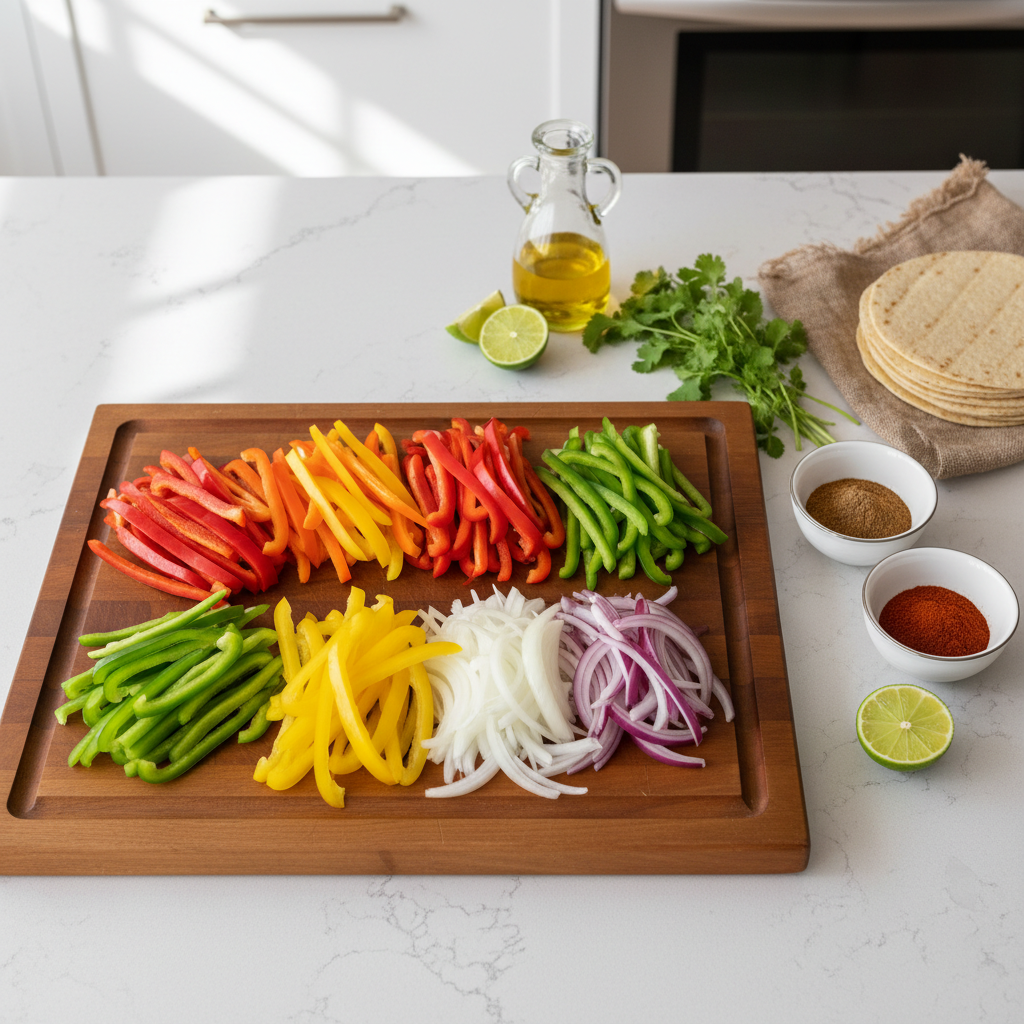
- 2 bell peppers, sliced into strips
- 1 large onion, sliced
- 2 tbsp oil, divided
- 2 to 3 tbsp fajita seasoning (or DIY, to taste)
- 1 lime
- Salt as needed
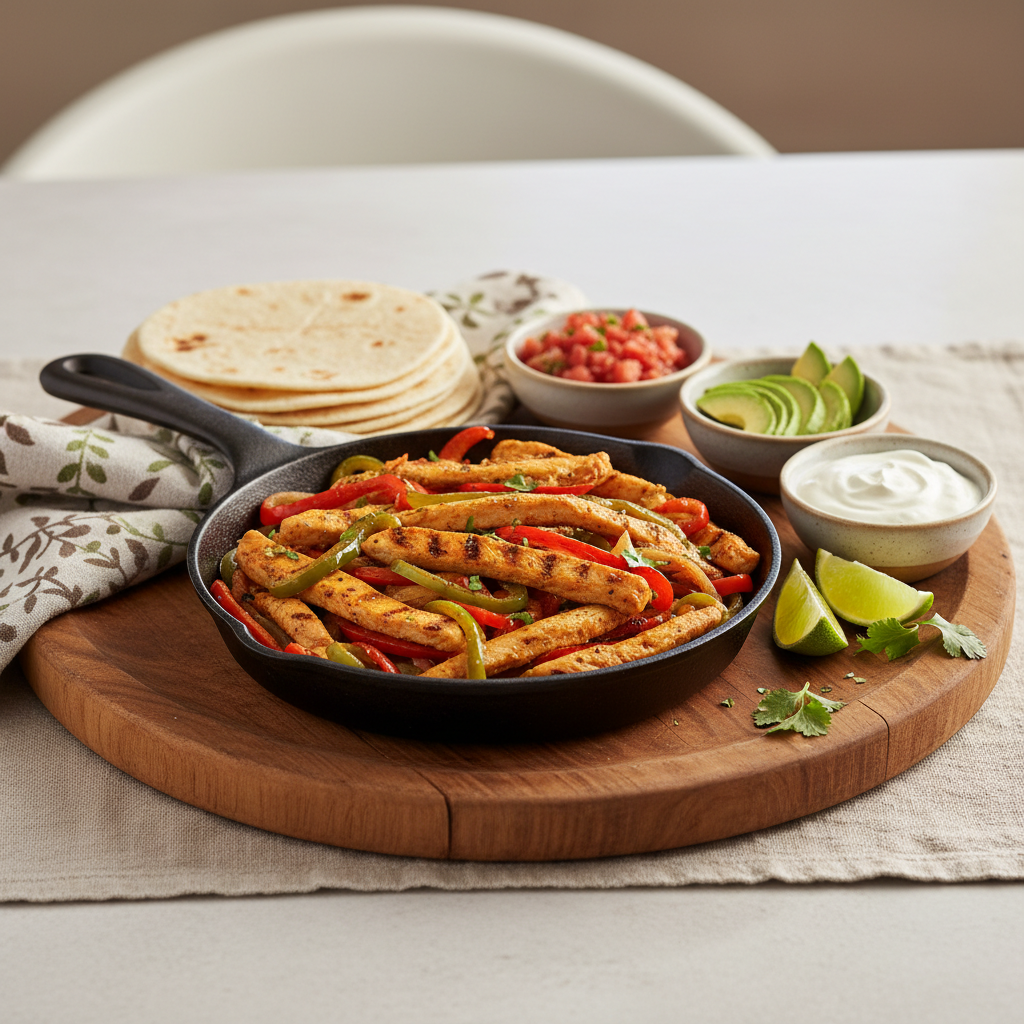
- Tortillas + toppings (sour cream, salsa, avocado, cheese, cilantro)
Step-by-step
- Prep for heat: Pat chicken dry, slice into 1/2-inch strips (or keep thighs whole if you prefer slicing after cooking). Toss with 1 tbsp oil and seasoning.
- Preheat the skillet: Heat pan over medium-high until it feels properly hot, a drop of water should sizzle and vanish quickly.
- Sear chicken: Add chicken in a single layer. Let it sit for browning, then toss. Cook until done, then move to a plate. For safety, aim for 165°F internal temp; if you’re unsure, check multiple pieces.
- Cook vegetables: Add remaining oil, then peppers and onions. Keep heat fairly high, stir occasionally so you get charred edges without turning everything mushy.
- Bring it together: Return chicken and any juices to the skillet. Squeeze in lime off heat, toss, taste, adjust salt.
Small detail that matters: lime goes in at the end. If you add it early, the acid can mute browning and push the dish toward “stewed” rather than “sizzling.”
Timing table: how to fit fajitas into a weeknight
This is the part most recipes skip, and it’s why people get stressed mid-cook. Use this as your rhythm.
| Task | Time | Notes |
|---|---|---|
| Slice peppers/onions | 5–7 min | Cut evenly so they cook at the same pace |
| Season chicken | 2 min | Oil + spices first, salt adjust later if needed |
| Sear chicken | 6–10 min | Breast tends to run faster than thighs |
| Cook vegetables | 6–8 min | Keep heat up, avoid crowding |
| Finish + warm tortillas | 3–5 min | Lime at the end, tortillas warm while you finish |
Practical tips for better flavor (without making it complicated)
If you want chicken fajitas easy but also crave that restaurant “sizzle,” these choices usually deliver more impact than adding more seasoning.
- Dry chicken = better browning: moisture is the enemy of a good sear.
- Don’t salt vegetables too early: wait until they start to soften and color, then season.
- Cook in batches if needed: a crowded pan is basically a steamer.
- Finish with acid and herbs: lime and cilantro can make a simple skillet taste brighter and more “complete.”
- Use the fond: those brown bits on the pan dissolve when you toss chicken back in, that’s free flavor.
If your household likes spice, add a sliced jalapeño with the peppers, or serve chipotle hot sauce on the side so everyone can customize.
Common mistakes (and how to recover fast)
Real kitchens get messy, smoke alarms happen, kids need something mid-cook. Here’s what to do when things drift.
- Chicken is cooked but bland: add a pinch of salt, then lime, then taste again. Often it’s seasoning balance, not more spice.
- Vegetables went too soft: crank heat for 60–90 seconds to drive off moisture, then stop stirring so you get some color.
- Pan is burning: pull it off heat, wipe carefully, reduce heat a notch, add a splash of water to loosen fond before it turns bitter.
- Chicken overcooked: slice thin, toss with extra lime and a spoon of salsa or a little olive oil, it won’t be perfect, but it often becomes “good enough.”
When it’s worth getting extra help
Most fajita issues are technique, not talent. That said, if you’re new to cooking chicken, an instant-read thermometer makes the process calmer and safer.
If you have dietary restrictions, food allergies, or a medical condition that changes sodium or fat targets, it’s smart to adjust seasoning and toppings and, in many cases, check with a qualified professional who knows your situation.
Conclusion: a weeknight plan you can repeat
Chicken fajitas easy works when you stop trying to cook everything at once, keep the skillet hot, and finish with lime after the heat. Once you do it this way a couple times, you’ll start improvising without losing the core texture and flavor.
Tonight’s simple move: cut everything before the pan heats, then commit to cooking chicken and vegetables in separate passes. Your fajitas will taste more like fajitas, and less like a stir-fry that hoped for the best.
FAQ
How do I keep chicken fajitas from getting watery?
Usually it’s crowding. Use a larger skillet or cook in batches, and wait to salt the peppers and onions until they start to brown.
Can I make chicken fajitas easy with frozen chicken?
You can, but it’s better to thaw first so the chicken can brown instead of steaming. If you’re in a pinch, thaw safely in the refrigerator, or use the microwave defrost setting and cook immediately.
Is it better to use chicken thighs or breasts for fajitas?
Thighs tend to stay juicy with less precision. Breasts work great too, but they benefit from thinner cuts and careful cooking so they don’t dry out.
What’s the best pan for skillet fajitas?
Cast iron and stainless usually brown better because they hold heat well. Nonstick can work for convenience, but you may get less char.
How do I warm tortillas for fajitas without drying them out?
Warm them briefly in a dry skillet, then stack and wrap in a clean towel. For corn tortillas, a quick direct-flame warm-up can add nice flavor if you’re comfortable doing it safely.
Can I meal prep this recipe for lunches?
Yes. Keep tortillas separate, store fajita filling in an airtight container, and reheat quickly in a hot skillet. Adding fresh lime after reheating helps revive flavor.
How do I make fajitas less spicy for kids?
Use a mild chili powder, skip jalapeños, and serve spicy toppings at the table. The dish can stay flavorful through cumin, garlic, and lime without heavy heat.
If you’re cooking chicken fajitas easy every week and want an even smoother routine, a simple prep kit approach helps, pre-sliced peppers and onions, a small jar of DIY seasoning, and a go-to topping lineup, so you can cook on autopilot without sacrificing flavor.