
Pasta e fagioli soup is one of those weeknight meals that sounds simple, yet it can turn watery, starchy, or oddly flat if the timing is off.
This version keeps the cozy Italian-American vibe but trims the fuss: a solid flavor base, a few smart pantry swaps, and a method that helps you control thickness and salt as you go.
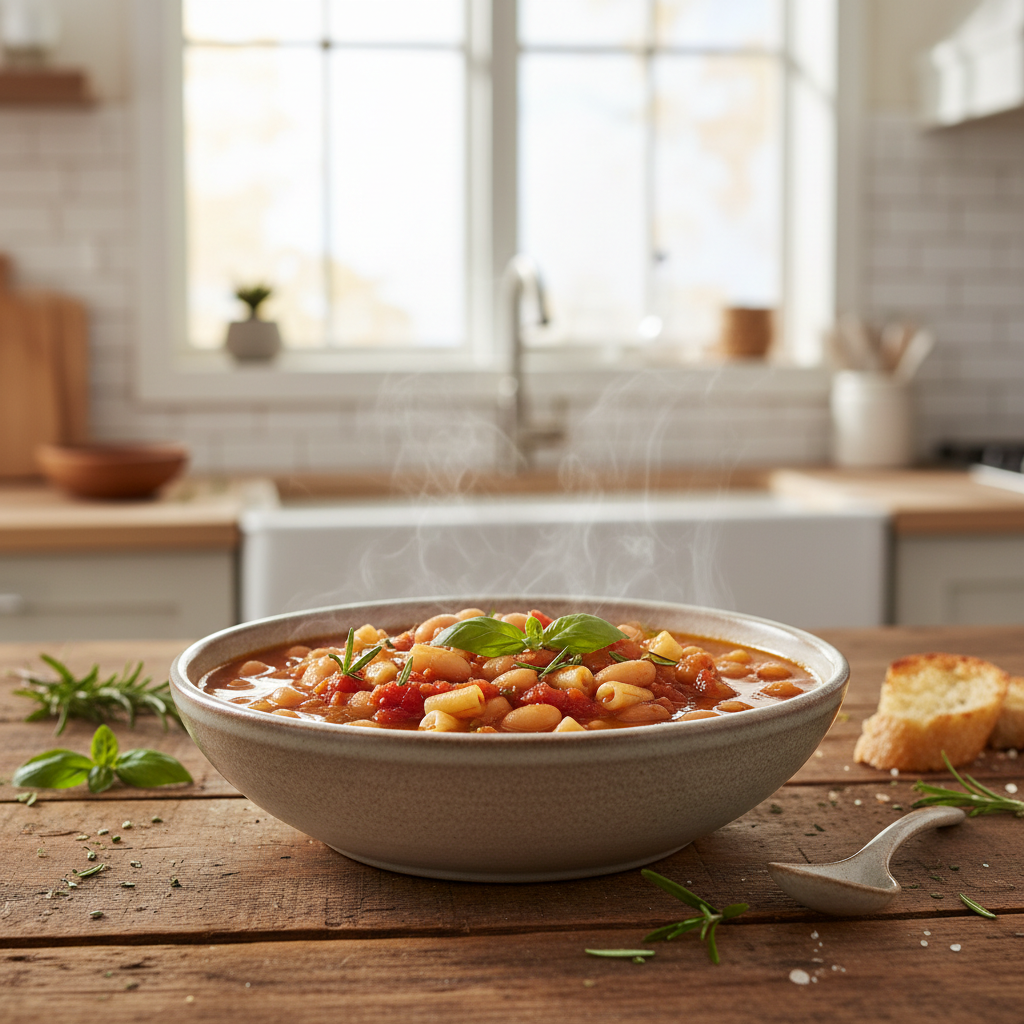
If you want a soup that tastes like it simmered all day but finishes in about 40 minutes, the key is building depth early, then protecting the pasta from overcooking.
Why this soup goes wrong (and how to avoid it)
Most “meh” pots come down to a few repeat issues, not the recipe itself.
- Flat flavor: not enough time spent on the soffritto, or adding garlic too early so it burns and turns bitter.
- Gummy pasta: cooking pasta in the pot too long, then letting it sit in hot soup.
- Too thick or too thin: beans and pasta both release starch, but the balance depends on when you add each and how much you mash.
- Over-salted broth: using salted stock plus salty canned beans plus cheese at the end.
Fixing these isn’t fancy, it’s mostly timing and a couple of small choices.
Ingredients (with practical substitutions)
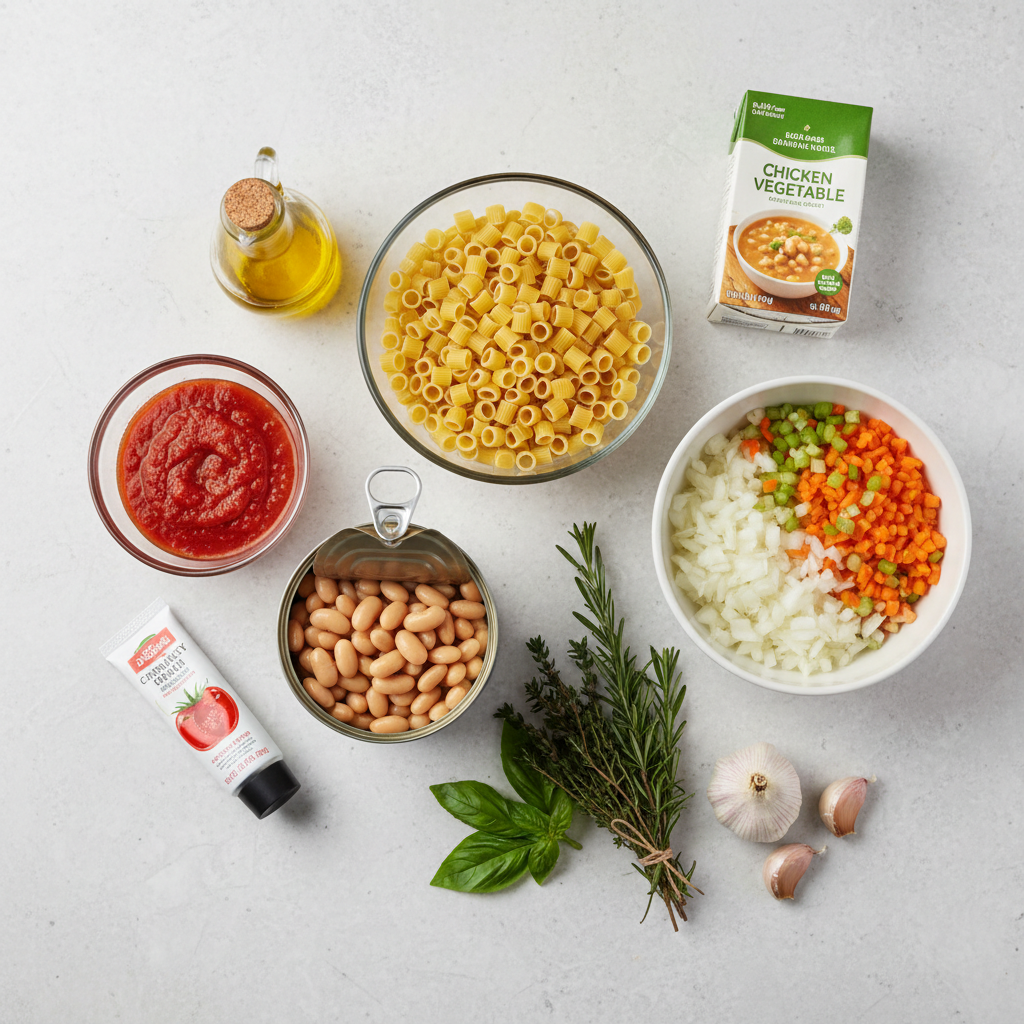
This is an “easy pantry” list. Use what you have, but keep the roles: aromatics, tomato, beans, broth, pasta, and a finishing fat.
Core ingredients
- Olive oil: 2–3 tbsp
- Onion: 1 medium, diced
- Carrot + celery: 1 each, diced (optional but recommended for sweetness)
- Garlic: 3–4 cloves, minced
- Tomato paste: 2 tbsp
- Canned tomatoes: 1 (14–15 oz) can crushed or diced
- Beans: 2 (15 oz) cans cannellini or great northern, rinsed and drained
- Broth: 4 cups low-sodium chicken or vegetable broth
- Water: 1–2 cups, as needed
- Small pasta: 3/4 cup ditalini, small shells, or elbow
- Herbs: 1 tsp dried oregano, 1/2 tsp dried thyme, bay leaf optional
- Finisher: grated Parmesan, plus a drizzle of olive oil
Optional add-ins (choose 1–2)
- Greens: kale or spinach, stirred in at the end
- Protein: browned Italian sausage or pancetta (reduce added salt)
- Heat: red pepper flakes
- Acid: a small squeeze of lemon or a splash of red wine vinegar
Easy pasta e fagioli soup: step-by-step
You’re aiming for a soup that’s brothy but lightly creamy from beans, not from cream.
1) Build the base (10 minutes)
- Heat olive oil in a Dutch oven or heavy pot over medium heat.
- Add onion, carrot, celery with a pinch of salt. Cook until softened and lightly golden, stirring occasionally.
- Add garlic and cook just until fragrant, about 30–60 seconds.
2) Toast the tomato paste (2 minutes)
- Stir in tomato paste and cook until it darkens slightly and sticks a bit to the pot, then loosens.
This small step helps pasta e fagioli soup taste less “canned tomato” and more rounded.
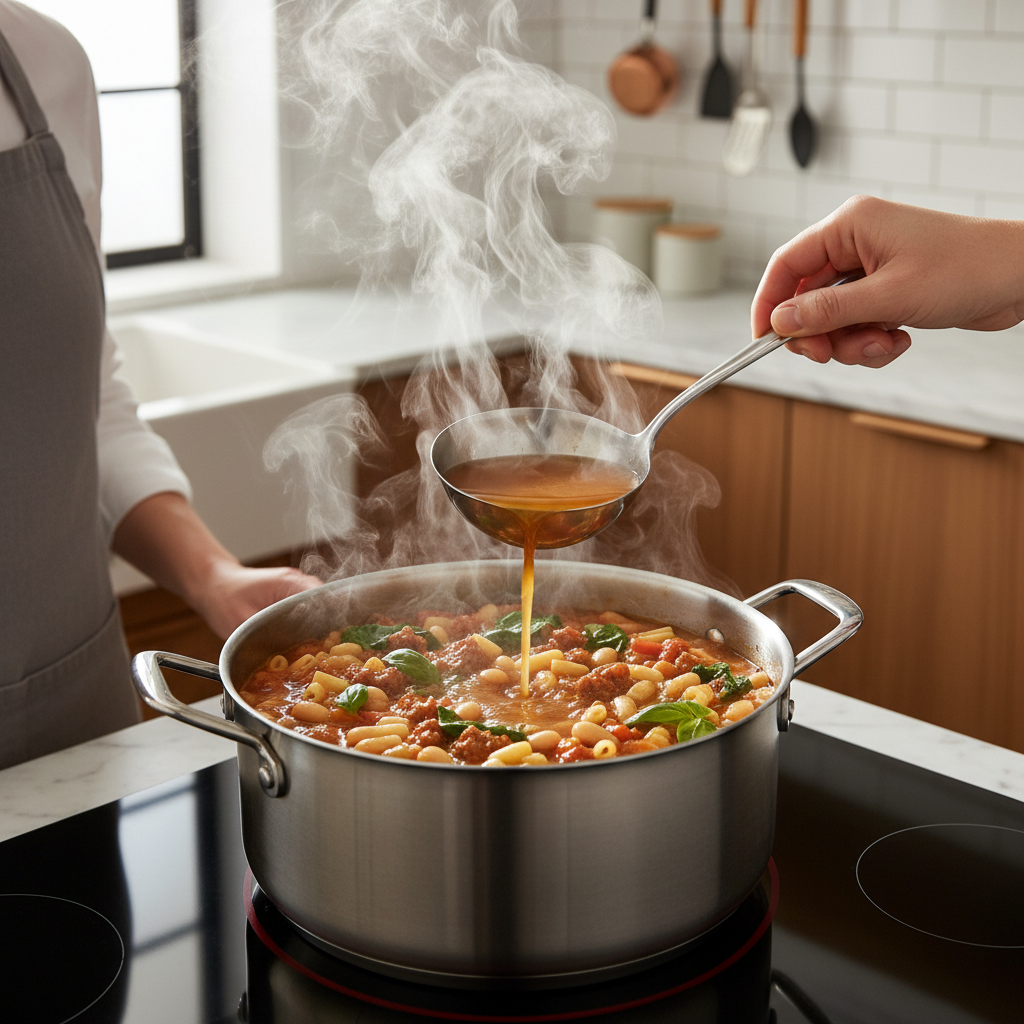
3) Simmer beans and broth (15–20 minutes)
- Add canned tomatoes, beans, broth, oregano, thyme, and bay leaf if using.
- Bring to a gentle simmer, then lower heat and cook 15–20 minutes.
- For a creamier body, mash about 1/2 cup of beans against the side of the pot, or blend a small ladle of soup and return it.
4) Cook pasta without ruining it (8–10 minutes)
- Add pasta and simmer until just shy of al dente.
- If the pot looks thick, add 1/2 cup water and keep simmering gently.
If you expect leftovers: cook pasta separately, then add to each bowl. It’s the easiest way to prevent bloated, mushy noodles on day two.
5) Finish and adjust (2 minutes)
- Taste, then add pepper and salt only as needed.
- Turn off heat, add a drizzle of olive oil, and top with Parmesan.
- Add greens now if using, and let them wilt in the residual heat.
Quick troubleshooting: fix it in the pot
This is the part most recipes skip, but it’s what makes the soup reliable.
| Problem | What’s happening | Fast fix |
|---|---|---|
| Too thick | Pasta and beans released starch | Add hot water or low-sodium broth in 1/2-cup splashes, re-taste salt |
| Too thin | Not enough starch/body | Mash more beans, simmer uncovered 5–10 minutes |
| Tastes flat | Needs salt, acid, or fat balance | Add a pinch of salt, then a tiny splash of vinegar/lemon, finish with olive oil |
| Too salty | Salted stock, salty cheese, or cured meat | Add water + unsalted beans if available, or increase tomato/bean ratio and simmer |
| Pasta mushy | Overcooked or sat in hot soup | For now: add a little broth and accept it; next time cook pasta separately |
Make-ahead, storage, and reheating (so it still tastes good)
Pasta e fagioli soup often tastes better the next day, but the texture can change fast if pasta stays in the pot.
- Refrigerate: 3–4 days is common for soups, but use your judgment on smell/appearance and follow food-safety guidance.
- Freeze: best if you freeze the soup base without pasta, then cook fresh pasta when serving.
- Reheat: warm gently, add water or broth to loosen, then adjust seasoning.
According to USDA Food Safety and Inspection Service, leftovers should be refrigerated promptly and reheated to a safe internal temperature; if you’re unsure, check their latest guidance for soups and stews.
Key takeaways (pin this part)
- Cook the aromatics longer than you think for better depth with the same ingredients.
- Toast tomato paste to reduce “raw tomato” taste.
- Control pasta texture by cooking separately when you want leftovers.
- Balance at the end with a little fat (olive oil/cheese) and a little acid (lemon/vinegar).
Conclusion: a reliable, weeknight-friendly bowl
Once you treat pasta timing and seasoning as the main levers, this soup stops being a gamble and starts being a repeatable comfort meal.
Make the base this week, decide whether you want pasta-in-pot or pasta-on-demand, then keep a note of your preferred thickness so the next batch feels even easier.
FAQ
Can I make pasta e fagioli soup in a slow cooker?
Yes, but cook pasta separately and add it per bowl. Slow cookers can over-soften pasta fast, and the soup can turn overly starchy if it sits on “warm.”
What beans work best if I can’t find cannellini?
Great northern beans are the closest swap. Navy beans also work, though they tend to break down more, which can make the soup thicker.
How do I make it vegetarian without losing flavor?
Use vegetable broth, lean into tomato paste toasting, and finish with olive oil plus Parmesan or a vegetarian hard cheese if that matters to you.
Why does my soup taste acidic?
Some canned tomatoes skew sharp. A longer simmer can mellow it, and a bit of fat or a small pinch of sugar sometimes helps, but go slowly so it doesn’t turn sweet.
Is it okay to rinse canned beans?
In many kitchens, yes, especially if you want more control over salt and a cleaner broth. If you like a thicker texture, you can skip rinsing one can, but adjust seasoning later.
What’s the best pasta shape for this recipe?
Small shapes that hold broth, like ditalini or small shells, usually feel right. If you only have larger pasta, break it up and watch cook time closely.
How can I add more protein?
Brown Italian sausage and build the aromatics in the rendered fat, then use low-sodium broth. If you prefer leaner options, shredded chicken can work, though it changes the classic vibe a bit.
Is pasta e fagioli soup healthy?
It can fit many eating styles: beans add fiber and plant protein, and you can control sodium with low-salt broth. If you have specific dietary needs, it’s worth checking with a registered dietitian or your clinician.
If you’re trying to get dinner on the table without guessing, keep a “base-only” batch in the freezer, then cook pasta fresh when you want a quick bowl that still tastes intentional.