
White pizza recipe questions usually boil down to one thing, how do you get that rich garlic flavor and creamy bite without ending up with a greasy, soggy slice.
If you’ve ever made “white pizza” that tasted flat, it’s rarely the cheese’s fault, it’s the sauce balance, oven heat, and how much moisture you put on top. A good garlic sauce needs enough fat to carry flavor, enough salt to wake it up, and enough restraint so the crust still stays crisp.
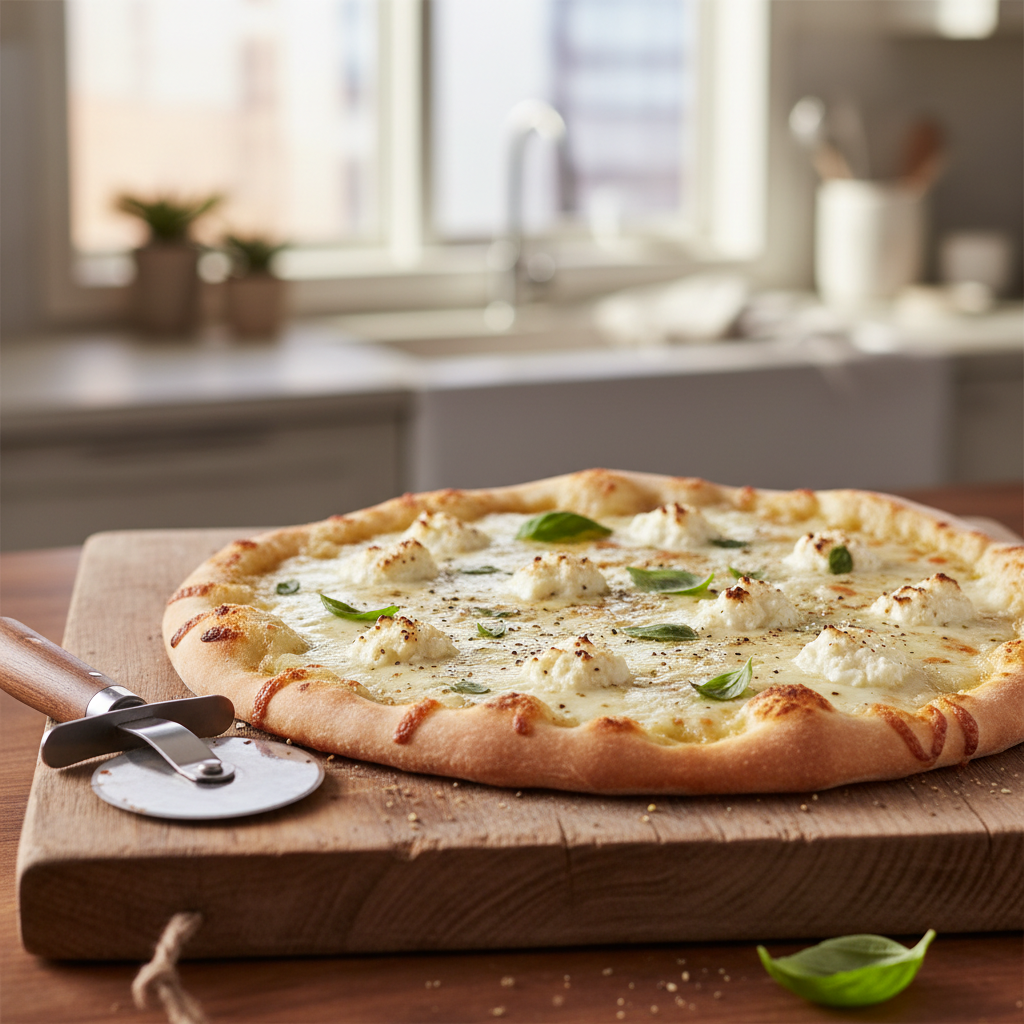
This guide walks you through a dependable garlic sauce, topping choices that won’t puddle, and the small technique tweaks that make a homemade pie feel like a legit pizzeria order.
Key takeaways: keep the sauce thick enough to cling, preheat the oven longer than you think, and treat watery toppings like a problem to solve, not a surprise to “bake off.”
What makes a white pizza “white” (and why garlic sauce matters)
White pizza skips tomato sauce and leans on dairy and aromatics. In most American kitchens, that means a garlicky base plus cheeses like mozzarella, ricotta, parmesan, and sometimes a little fontina.
Garlic sauce matters because it replaces the brightness you normally get from tomatoes. Without that punch, a white pie can taste heavy or one-note, especially if you go big on cheese.
According to USDA FoodData Central, garlic contains sulfur compounds that contribute to its signature aroma and flavor, which is why even a small amount can carry the whole pizza when it’s cooked gently and not burned.
Ingredients for a creamy garlic sauce (and smart substitutions)
This sauce lands in the sweet spot between Alfredo and a simple garlic oil, creamy but not so thick it turns into glue.
- Butter (3 tbsp): flavor and richness. Olive oil works, but butter browns better.
- Garlic (4–6 cloves, minced): adjust to taste, but avoid scorching.
- Flour (2 tbsp): thickens the sauce so it spreads without soaking the crust.
- Milk (1 cup): whole milk gives the best body, 2% is fine.
- Parmesan (1/3 cup, finely grated): salty depth.
- Salt + black pepper: season in small steps.
- Optional: pinch of nutmeg, chili flakes, lemon zest for lift.
If you need a no-flour option: you can reduce heavy cream with garlic and parmesan, but it’s easier to overdo it and end up oily. If you go that route, keep the layer thin on the dough.
White pizza recipe: step-by-step garlic sauce + pizza build
1) Make the garlic sauce (10–12 minutes)
In a saucepan over medium heat, melt butter, add garlic and cook 30–60 seconds until fragrant. You want “toasty” aroma, not browned bits.
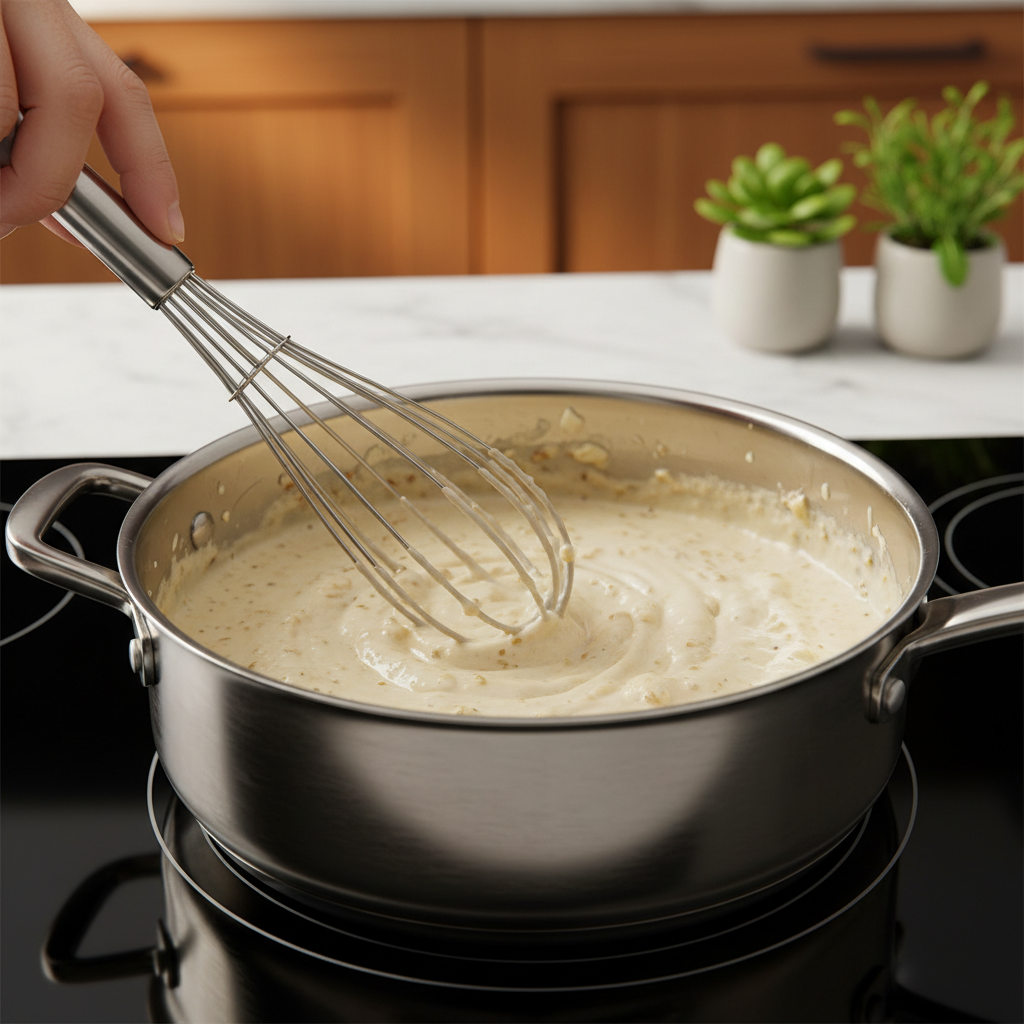
Whisk in flour and cook 1 minute, it should look like a smooth paste. Slowly whisk in milk, keep whisking until it thickens, usually 3–5 minutes.
Turn heat low, stir in parmesan, salt, and pepper. If it gets too thick, add a splash of milk. Cool 5 minutes so it spreads without running.
2) Prep the oven and dough (this is where most home pies fail)
Crank your oven as high as it comfortably goes, often 500–550°F in the U.S. Preheat at least 30 minutes if you’re using a stone or steel.
Stretch dough on a floured surface, then move it to parchment for easy launching. Lightly brush the outer rim with olive oil for better browning.
3) Build the pizza
- Spread a thin, even layer of garlic sauce, leave a 1-inch border.
- Add shredded low-moisture mozzarella, then small dollops of ricotta.
- Finish with a light shower of parmesan and black pepper.
Portion reality: too much sauce is the fastest way to soggy center. On a 12–14 inch pie, you typically need less than you think, about 1/2 to 2/3 cup depending on thickness.
4) Bake
Bake 7–12 minutes depending on oven and surface, until the crust is browned and cheese has spotty golden areas. Rest 2 minutes, slice, then add fresh basil or a drizzle of olive oil if you like.
Toppings that work well (and toppings that quietly ruin the crust)
White pies love vegetables and cured meats, but moisture is the hidden tax.
- Great choices: sautéed mushrooms, caramelized onions, spinach (well-drained), prosciutto, cooked Italian sausage, roasted garlic, artichokes (patted dry).
- Proceed with caution: fresh mozzarella (very wet), raw zucchini, fresh tomatoes, watery ricotta straight from a tub.
If you want the “white pizza with spinach” vibe, cook spinach quickly, squeeze it dry in a towel, then scatter lightly. That single step usually fixes the puddles.
Quick troubleshooting: why your white pizza tastes bland, oily, or soggy
Most issues trace back to heat, moisture, or seasoning rhythm.
- Bland: sauce under-salted, not enough parmesan, or garlic cooked too hot and turned bitter. Add salt gradually, finish with parmesan after bake.
- Oily: too much cheese, very fatty toppings, or sauce reduced too far. Use low-moisture mozzarella, blot greasy meats.
- Soggy center: too much sauce, wet toppings, or oven not fully preheated. Use a thinner sauce layer and bake on a hot stone/steel.
- Burnt garlic taste: garlic browned in butter early. Cook garlic briefly, keep heat moderate, and let the roux protect it.
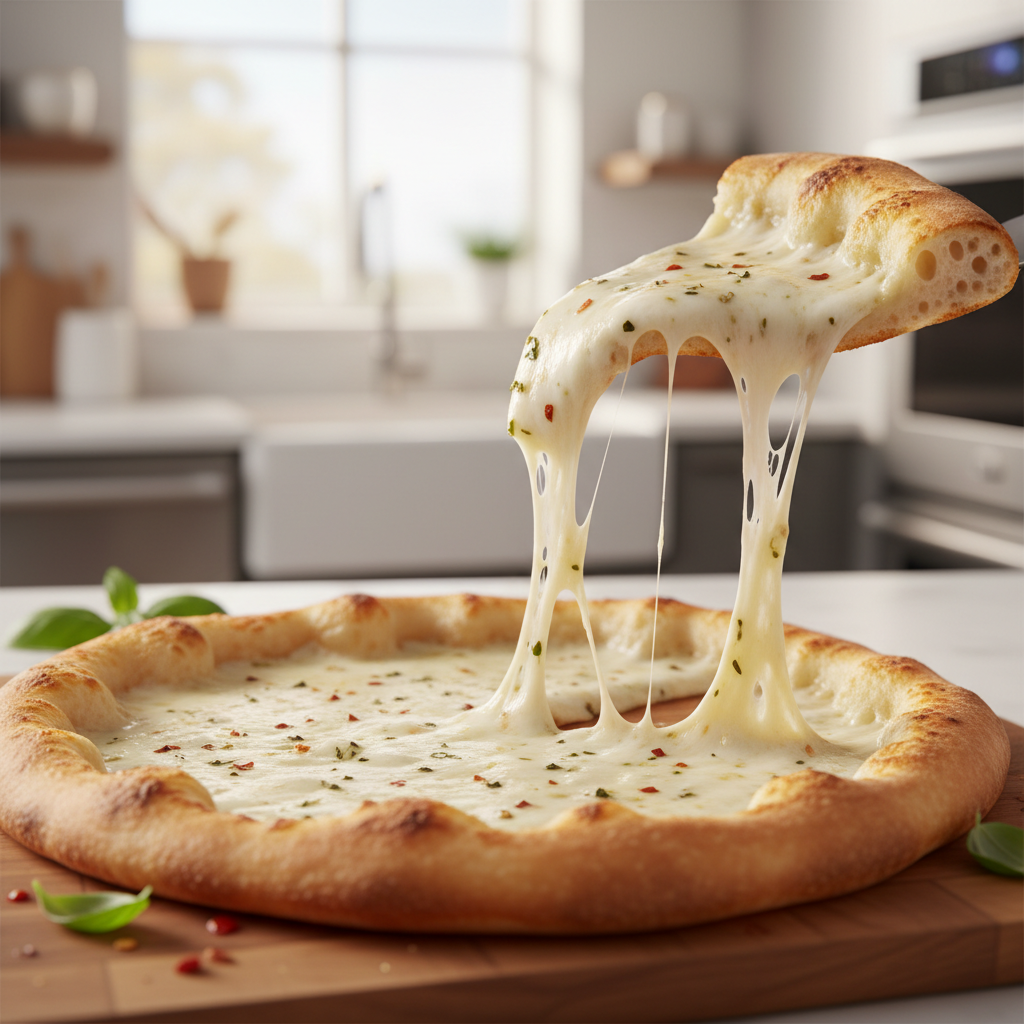
One small habit that helps, taste the sauce before it hits the dough. Once it’s baked under cheese, fixing seasoning gets harder.
Cheese and sauce balance table (use it like a shortcut)
These are practical starting points for a 12–14 inch pie. Your dough thickness and oven behavior may shift the sweet spot a bit.
| Style goal | Garlic sauce amount | Cheese approach | Best bake surface |
|---|---|---|---|
| Crisp + light | 1/2 cup (thin layer) | Mostly mozzarella, light ricotta | Steel or stone |
| Classic creamy | 2/3 cup | Mozzarella + ricotta dollops + parmesan | Stone or hot sheet pan |
| “Alfredo-ish” rich | 2/3 cup (thicker sauce) | Add fontina, reduce mozzarella slightly | Steel preferred |
| Veg-heavy | 1/2 cup | Go lighter on cheese, pre-cook veg | Steel/stone, longer preheat |
Practical prep tips for busy weeknights
This white pizza recipe becomes way easier when you treat it like a two-part job, sauce now, bake later.
- Make sauce ahead: refrigerate up to 3–4 days in a sealed container, rewarm gently and whisk smooth.
- Shred cheese yourself: pre-shredded often has anti-caking agents that melt a bit differently. Not a deal-breaker, just a texture note.
- Freeze dough balls: thaw in fridge overnight, then room temp 60–90 minutes before stretching.
- Use parchment: easier transfer, fewer launch disasters.
According to the U.S. Food and Drug Administration, refrigerated leftovers should generally be used within a few days for quality and safety. If you’re unsure about storage time or your fridge runs warm, it’s smarter to discard and remake the sauce.
Conclusion: a white pizza you’ll actually want to repeat
A solid white pizza recipe is less about fancy ingredients and more about control, keep the garlic sauce flavorful but not runny, push your oven heat, and stay realistic about moisture. Do those three things and the rest feels surprisingly forgiving.
If you want a simple next step, make the sauce once, bake two pies in the same week, one classic cheese, one with a cooked topping like mushrooms or spinach, you’ll learn your oven fast, and the pizza gets better almost immediately.
FAQ
Can I use jarred Alfredo sauce for a white pizza recipe?
You can, and many people do on weeknights, but jarred sauces tend to be salt-forward and sometimes thin when heated. Use a lighter layer and add garlic or black pepper to make it taste less “generic.”
How do I keep garlic from tasting bitter in white pizza sauce?
Bitter usually means the garlic browned too hard. Cook it briefly in melted butter, then add flour and milk fairly quickly so it simmers gently rather than frying.
What cheese combo tastes most like a pizzeria white pie?
Low-moisture mozzarella for stretch, ricotta for creaminess, and parmesan for sharpness gets you close. If you like a richer finish, a little fontina works well, but keep portions modest.
Should I put sauce or cheese first on white pizza?
Sauce first is easier to spread evenly, then cheese on top helps protect the sauce from drying out. If your oven runs cool, a slightly heavier cheese layer can help prevent surface drying.
Why is my white pizza watery even when it looks done?
Often it’s topping moisture that releases after slicing, especially fresh mozzarella or vegetables. Pre-cook and drain vegetables, and consider swapping in low-moisture mozzarella for the main layer.
Can I make this garlic sauce without dairy?
There are plant-based milks and vegan cheeses that can work, but thickening and flavor vary a lot by brand. If you have dietary needs, it may help to consult a registered dietitian for ingredient swaps that fit your situation.
What temperature should I bake white pizza at?
As hot as your oven reliably goes, commonly 500–550°F. High heat sets the crust quickly, which matters more on a white pie because the sauce and cheese add moisture.
If you’re trying to dial in your own go-to white pizza recipe, keep notes on sauce thickness, oven preheat time, and topping moisture, those three variables usually explain 90% of the results, and they’re easy to adjust next bake.