
Filipino adobo easy is the kind of recipe you make when you want big flavor without babysitting a stove, it leans on pantry staples and a simple braise that stays forgiving even on a busy weeknight.
If you have tried adobo once and thought it was too sour, too salty, or oddly flat, you are not alone, most misses come from rushing the simmer, using the wrong pan, or not balancing the sauce at the end.
This guide keeps it practical, what to buy, what to swap, how to control tang and salt, and how to get that shiny, spoonable sauce that makes rice disappear fast.
What makes chicken adobo “easy” (and where people get stuck)
Adobo usually works because it is more method than strict recipe: a quick sear, then a gentle braise in a soy-vinegar base, finished by reducing the liquid until it clings.
Where home cooks often hit friction in the US kitchen comes down to a few very normal things:
- Using boneless skinless breast and expecting it to stay juicy, it can, but timing gets tight.
- Boiling too hard, the sauce turns sharp and the chicken texture goes stringy.
- Not tasting at the end, adobo changes as it reduces, salt and acidity concentrate.
- Skipping the reduction, you get “adobo soup” instead of a glossy sauce.
Once you treat it like a braise plus reduction, it becomes predictable, even if you tweak ingredients.
Ingredients and smart swaps (US pantry friendly)
You do not need specialty ingredients to make a satisfying adobo, but quality and balance matter more than people think. Here is a practical list with options.
Core ingredients
- Chicken thighs (bone-in, skin-on): most forgiving, best texture for braising.
- Soy sauce: regular is fine, avoid “dark soy” unless you know its intensity.
- Vinegar: cane vinegar is classic, but distilled white or apple cider vinegar works well in many US kitchens.
- Garlic: lots, lightly smashed, it perfumes the sauce.
- Bay leaves: the background note that makes it taste like adobo.
- Whole black peppercorns: a warmer, rounder heat than ground pepper.
Optional, but often worth it
- Brown sugar or a small spoon of honey: not to make it sweet, just to soften edges.
- Onion: some households add it, some do not, it adds body.
- Water or low-sodium chicken broth: helps control salt while you simmer longer.
Quick ratios table (a helpful starting point)
These ratios are not “law,” but they keep the flavor in the right neighborhood, then you adjust at the finish.
| Batch size | Soy sauce | Vinegar | Water/broth | Garlic |
|---|---|---|---|---|
| 2 lb chicken | 1/3 cup | 1/4 cup | 1/2 cup | 6–8 cloves |
| 3 lb chicken | 1/2 cup | 1/3 cup | 3/4 cup | 8–10 cloves |
Easy chicken adobo recipe (step-by-step)
This method aims for tender chicken and a sauce you can spoon over rice, with a controllable tang. If you are cooking this for the first time, keep the simmer gentle and trust the final reduction.
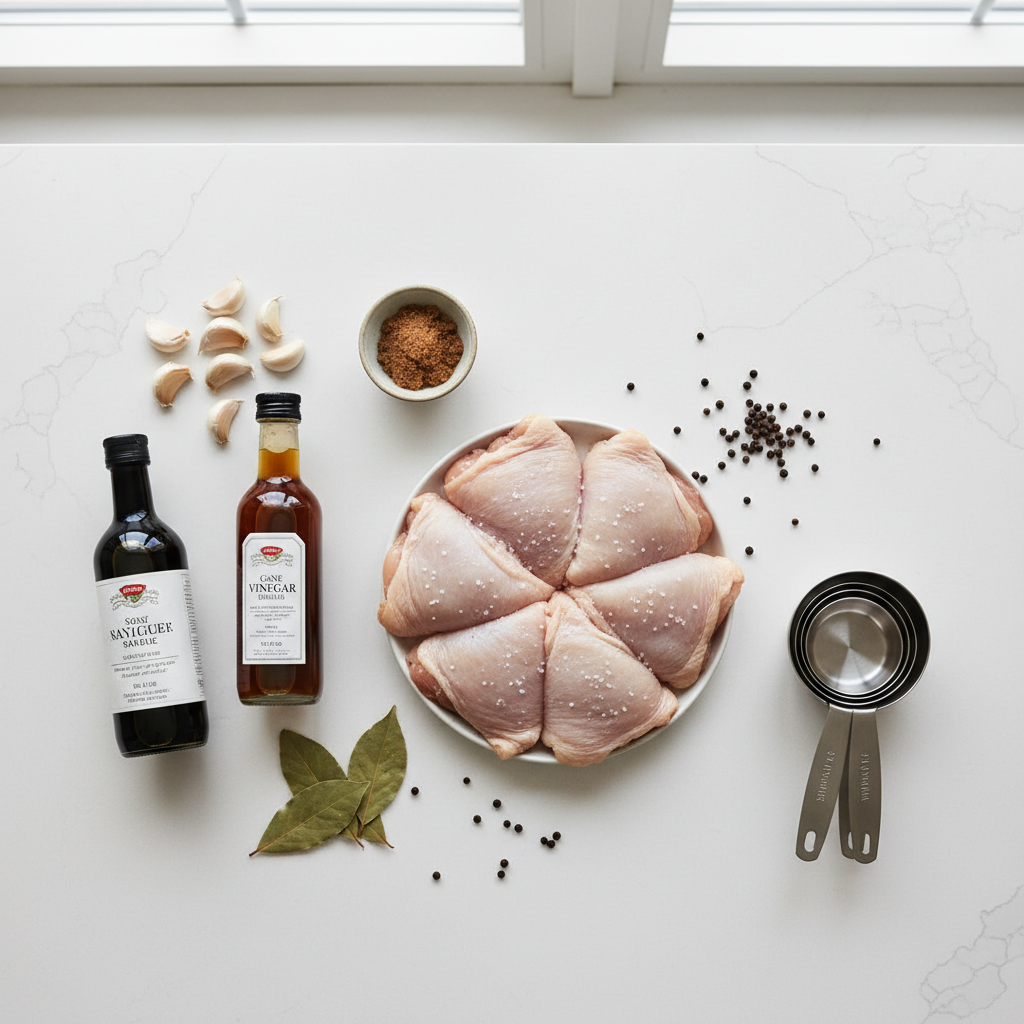
What you need
- 2 to 2.5 lb bone-in, skin-on chicken thighs (or drumsticks)
- 1/3 cup soy sauce
- 1/4 cup vinegar (distilled white, cane, or apple cider)
- 1/2 cup water or low-sodium chicken broth
- 6 to 8 garlic cloves, smashed
- 2 bay leaves
- 1 tsp whole black peppercorns
- 1 tbsp brown sugar (optional)
- 1 tbsp neutral oil (if chicken skin is lean)
Cook it
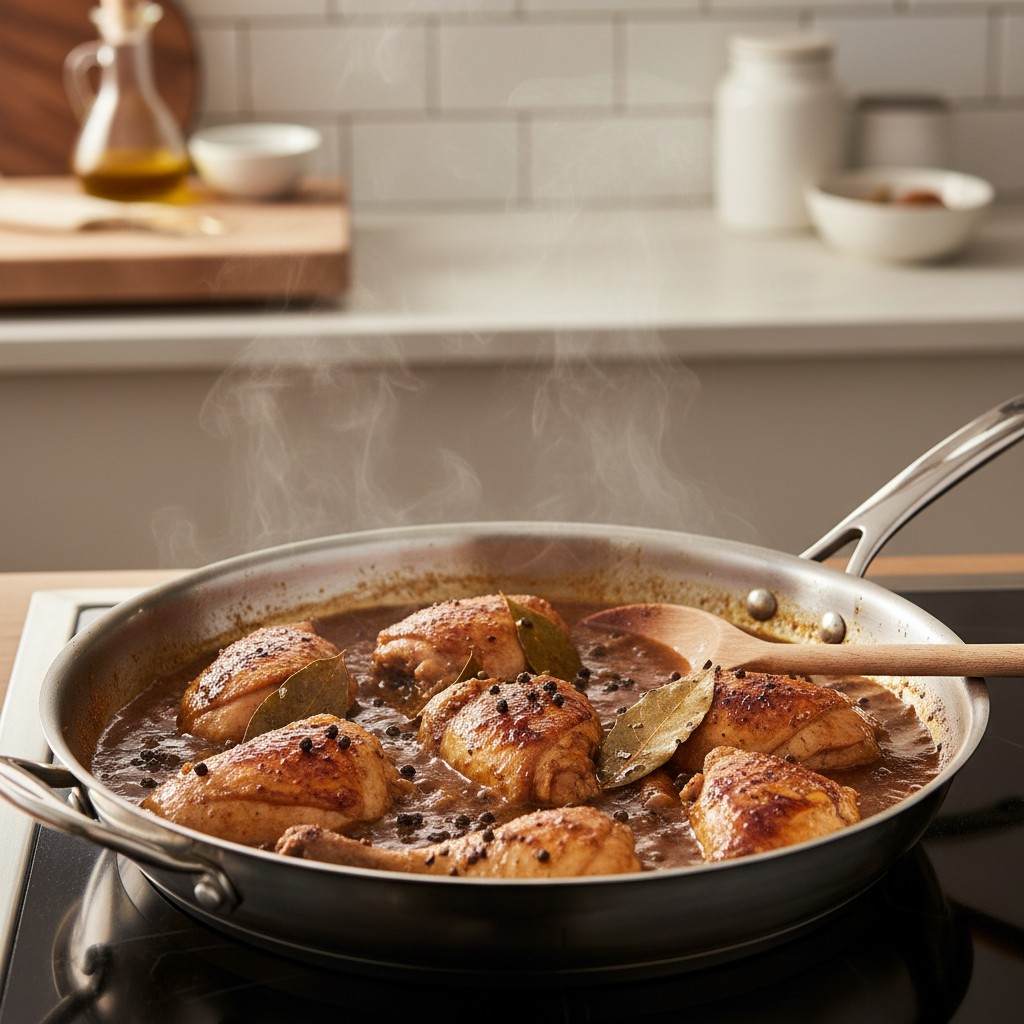
- Sear for flavor: Pat chicken dry, heat a wide pan over medium-high, sear skin-side down until golden, 4 to 6 minutes, flip and sear 2 minutes more.
- Add braising liquid: Add garlic, bay leaves, peppercorns, soy sauce, vinegar, and water or broth, bring to a simmer.
- Gentle simmer: Lower heat, cover slightly, keep a light simmer 25 to 35 minutes, turning chicken once.
- Reduce: Remove lid, simmer 8 to 12 minutes until sauce looks glossy and lightly thickened, taste and adjust.
According to USDA, chicken is considered safe when it reaches an internal temperature of 165°F, if you are unsure, a basic instant-read thermometer keeps the “is it done?” stress out of dinner.
If you want the sauce slightly thicker without over-reducing, let it rest 5 minutes off heat, it tightens up as it cools.
How to tell which adobo problem you have (quick self-check)
When someone says “my adobo didn’t taste right,” it usually falls into one of these buckets. Identify the bucket, then the fix becomes obvious.
- Too sour: vinegar feels sharp at the finish, sauce lacks roundness.
- Too salty: soy dominates, sauce tastes harsh once reduced.
- Flat or boring: tastes like salty stew, not aromatic.
- Watery sauce: flavor is OK, texture does not cling.
- Dry chicken: meat feels tight, even if sauce tastes fine.
Fixes and variations (without losing the adobo vibe)
Think of these as small steering moves. Adobo forgives a lot, but it does reward restraint, small changes, then taste again.
If it tastes too sour
- Simmer 3 to 5 minutes longer before you judge, raw vinegar edge often calms down.
- Add 1 to 2 tsp brown sugar, then reassess, you want balance, not sweetness.
- Stir in a splash of water or broth, especially if you reduced too far.
If it tastes too salty
- Add water or broth in small splashes, then reduce again to rebuild body.
- Next time, use low-sodium soy sauce and keep the vinegar the same, many US soy sauces run salty.
If it is flat
- Add more garlic early, or lightly smash extra cloves and simmer them, adobo wants aroma.
- Use whole peppercorns, ground pepper can read dusty in a long simmer.
- Finish with a teaspoon of vinegar off heat, only if it tastes dull, not if it already tastes sharp.
If the sauce is thin
- Use a wider pan next time, more surface area reduces faster.
- Reduce uncovered at a steady simmer, not a rolling boil.
- Do not add cornstarch unless you really need it, it can make the sauce taste “gravy-like” rather than adobo.
If you prefer boneless chicken
Boneless thighs work well, cut simmer time, and start checking earlier, chicken breast can work but tends to dry out, many cooks reserve it for quick versions where sauce reduces separately.
Practical serving, storage, and make-ahead tips
Adobo is a weeknight dinner that also behaves like meal prep, in many cases it tastes better the next day because the sauce penetrates the meat.
- Serve with: steamed jasmine rice, garlic fried rice, or simple sautéed greens.
- Make-ahead: cook fully, cool, refrigerate, then rewarm gently and reduce 2 to 4 minutes if needed.
- Storage: keep in a sealed container, reheat until steaming hot, if you have food safety concerns, consider checking guidance from USDA.
- Freeze: freeze in flat bags for faster thawing, sauce protects texture reasonably well.
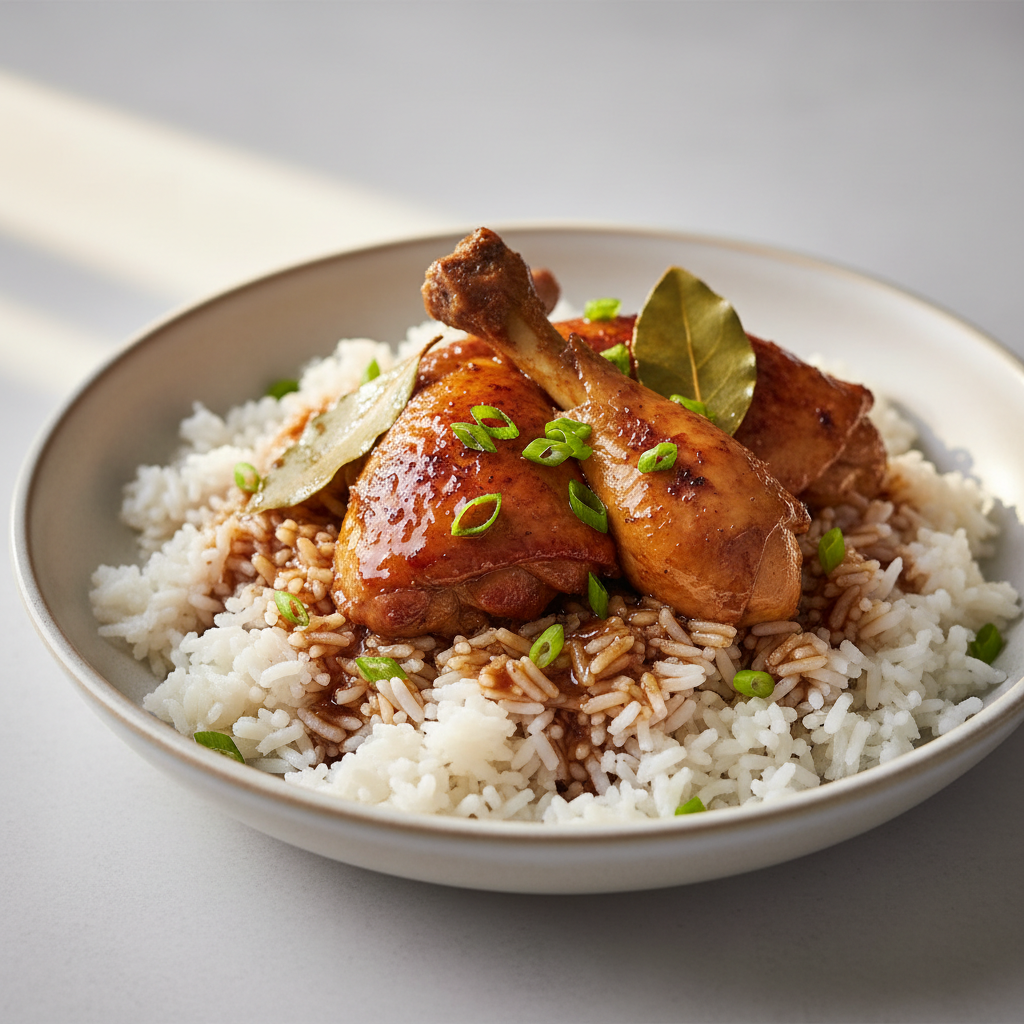
If you are packing lunches, keep rice and adobo separate until reheating, the rice stays better, and the sauce stays glossy instead of soaking in.
Key takeaways before you cook
- Gentle simmer beats hard boiling, texture and flavor both improve.
- Bone-in thighs buy you margin, especially for first-timers.
- Reduction is the “secret step” that turns braising liquid into adobo sauce.
- Taste at the end, then adjust salt, tang, and sweetness in small moves.
Conclusion: a reliable weeknight adobo you can repeat
Once you cook it a couple times, filipino adobo easy stops being a “special recipe” and starts feeling like a flexible dinner pattern, sear, simmer, reduce, then tune the sauce to your taste.
If you want the simplest next step, cook the base version with thighs and a wide pan, take notes on how tangy you like it, and make one small adjustment next time instead of changing everything at once.
FAQ
Can I make easy Filipino adobo with chicken breast?
You can, but it is less forgiving. Many cooks simmer breast briefly, then remove it while the sauce reduces, and return it at the end so it does not dry out.
What vinegar is best for chicken adobo in the US?
Cane vinegar is common in Filipino cooking, but distilled white vinegar works reliably. Apple cider vinegar can taste slightly fruitier, which some people enjoy, especially with a touch of sugar.
Why does my adobo taste too sharp even after simmering?
It is often reduction combined with high vinegar percentage. Add a small splash of water or broth, simmer gently a few minutes, then taste again before adding anything else.
Do I need to marinate for adobo to taste authentic?
Marinating helps, but it is not mandatory for good flavor. The braise does most of the work, especially with bone-in pieces and enough garlic and bay leaf.
How do I thicken adobo sauce without cornstarch?
Use a wide pan and reduce uncovered at a steady simmer, it thickens through evaporation and gelatin from the chicken, especially if you use bone-in cuts.
Is adobo supposed to be sweet?
Not necessarily. Some versions lean slightly sweet to balance acidity, others stay more savory and peppery, both can be “right,” it depends on the household style.
Can I cook adobo in a nonstick pan?
You can, but browning may be lighter and reduction may take longer. Stainless steel or enameled cast iron often gives better sear and sauce depth, just keep heat moderate to avoid scorching.
How long does chicken adobo keep in the fridge?
It varies by handling and fridge temperature. For specific storage times and safe reheating, it is smart to follow USDA guidance and when in doubt, discard.
If you are trying to make filipino adobo easy fit your routine, batch-cook on Sunday and keep the sauce slightly looser, then reduce quickly on a weeknight while rice cooks, it feels like “real cooking” without the time sink.