
Salmon recipes can be incredibly healthy and weeknight-friendly, but most people quit after one bad tray of dry, chalky fish.
Baked salmon is supposed to be the “easy dinner” you can repeat, yet small details, oven temperature, thickness, and sauces make the difference between juicy flakes and a sad overcooked filet.
This guide keeps it practical: a quick nutrition-and-safety baseline, a don’t-overthink-it baking method, and several healthy baked variations you can rotate all month.
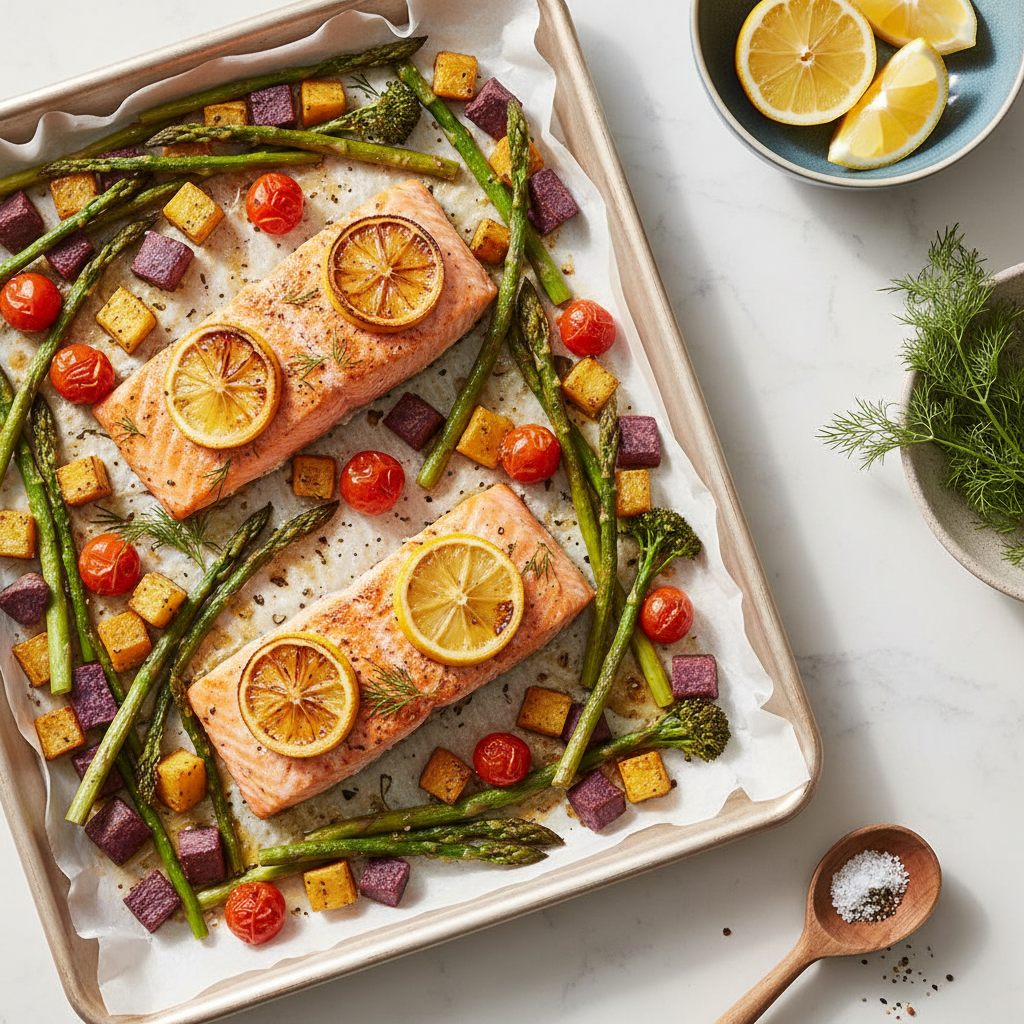
What “healthy baked salmon” usually means (and what it doesn’t)
Healthy baked salmon generally comes down to three things: gentle cooking, smart fats, and balanced sides. Salmon already brings omega-3 fats and high-quality protein, so you rarely need heavy breading or lots of added butter to make it satisfying.
According to the American Heart Association, eating fish (especially fatty fish like salmon) a couple times per week is commonly recommended as part of a heart-healthy eating pattern. That doesn’t mean every salmon dinner is “automatically healthy,” but it’s a strong base.
- Healthy usually looks like: olive oil, herbs, citrus, yogurt-based sauces, lots of vegetables, and moderate sodium.
- Not-so-helpful habits: over-sugary glazes, very salty bottled marinades, and baking until it turns pale and dry.
The foolproof baked salmon method (so you don’t overcook it)
If you only remember one thing, make it this: time and thickness beat “minutes per pound” every time. A 1-inch thick filet behaves very differently from a thin tail piece.
Basic bake
- Oven: 400°F (convection 375°F tends to cook faster)
- Pan setup: sheet pan + parchment or foil, light oil to prevent sticking
- Seasoning: salt, pepper, lemon, garlic, herbs, plus 1–2 tsp olive oil per portion
How long to bake (quick guide)
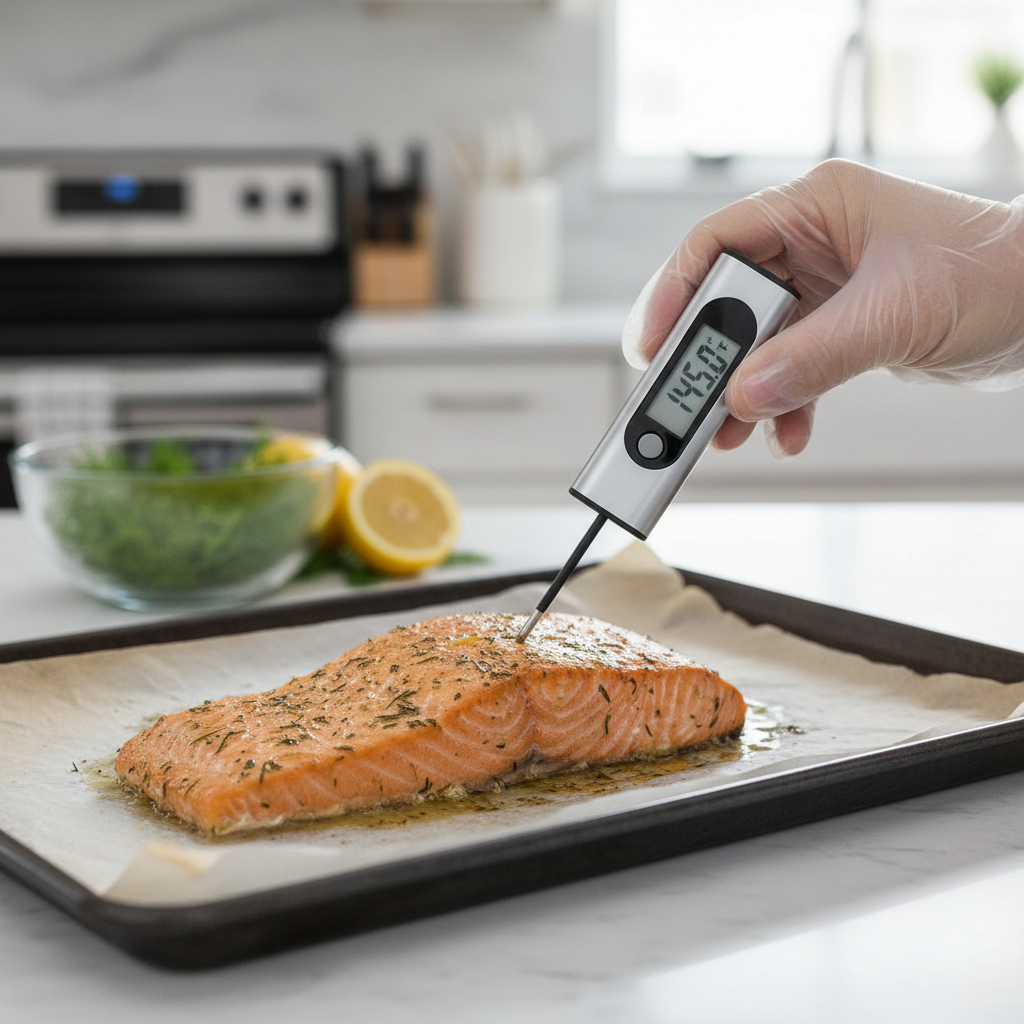
Use this as a starting point, then trust visual cues and temperature if you have a thermometer.
| Filet thickness | Approx bake time at 400°F | What “done” looks like |
|---|---|---|
| 1/2 inch (thin) | 8–10 minutes | Edges opaque, center just turning opaque |
| 3/4 inch | 10–12 minutes | Flakes easily with gentle pressure |
| 1 inch | 12–15 minutes | Moist flakes, no translucent band |
| 1 1/4 inch (thick) | 15–18 minutes | Still juicy, flakes in larger pieces |
According to the USDA, seafood is considered safe when it reaches an internal temperature of 145°F. Many home cooks prefer pulling salmon slightly earlier for a softer texture, but if you’re pregnant, immunocompromised, or cooking for someone who needs extra caution, it’s reasonable to follow the USDA guideline and consult a healthcare professional if unsure.
Self-check: which salmon problem are you dealing with?
Most “healthy baked salmon” frustrations repeat in predictable ways. Pinpoint yours and the fix becomes simpler.
- Dry and stringy: oven too hot, cooked too long, thin pieces baked like thick ones.
- White stuff (albumin) everywhere: heat too aggressive or fish handled roughly; it’s usually safe, just not pretty.
- Bland: not enough salt/acid, sauce added too late, or you skipped aromatics.
- Sticking to pan: no parchment/foil, or skin-side not prepped.
- Uneven doneness: mixed thickness on one tray, or crowded vegetables steaming the fish.
Key takeaway: don’t chase new salmon recipes until your baseline bake is consistent. After that, sauces and seasonings actually feel “easy.”
5 healthy baked salmon recipes you can rotate
These are built around the same cooking method, so you’re changing flavor without relearning timing.
1) Lemon-garlic herb salmon (the default)
- Mix: olive oil, lemon zest + juice, minced garlic, parsley/dill, black pepper
- Bake: 400°F until just done
- Works with: asparagus, green beans, zucchini coins on the same tray
2) Dijon yogurt salmon (creamy, still light)
- Whisk: plain Greek yogurt, Dijon mustard, lemon, garlic powder, pinch of salt
- Spread: thin layer on top before baking
- Finish: chopped chives or scallions
3) Maple-mustard “weeknight” glaze (keep sugar modest)
- Stir: Dijon, 1–2 tsp maple syrup per portion, cider vinegar, smoked paprika
- Brush: at the start, then again in the last 2 minutes
- Tip: pair with bitter greens or broccoli to balance sweetness
4) Mediterranean tomato-olive salmon (bold without frying)
- Top with: chopped cherry tomatoes, sliced olives, capers (optional), oregano
- Add: a drizzle of olive oil and lemon
- Serve: over quinoa or farro, plus arugula
5) Cajun-spiced salmon with crunchy slaw
- Rub: Cajun seasoning (watch sodium), garlic powder, a little brown sugar if desired
- Bake: normally, then squeeze lime on top
- Side: cabbage slaw with yogurt-lime dressing
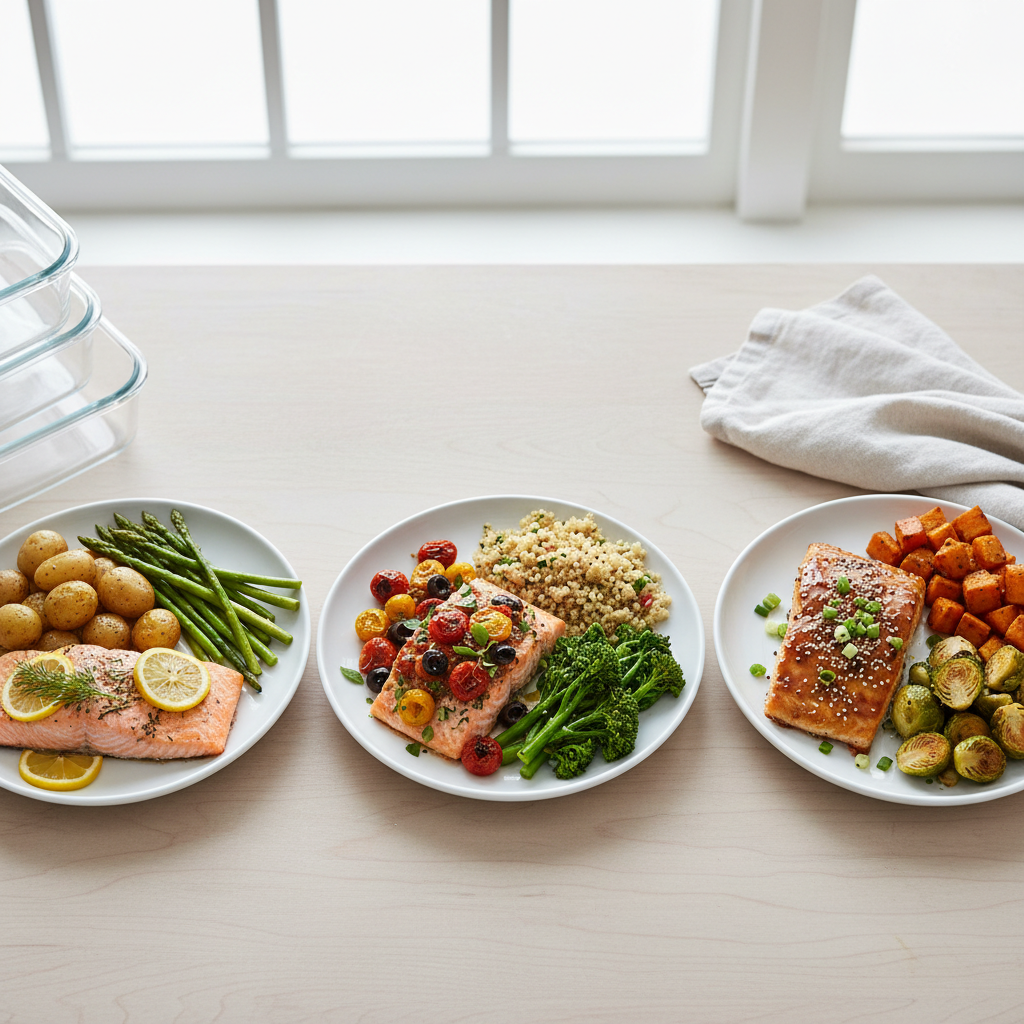
Practical prep: sides, swaps, and meal prep that stays tasty
Healthy baked salmon gets much easier when you stop treating the fish as the whole meal. Build a simple template and repeat it.
Easy plate template
- Protein: baked salmon
- Veg: 2 cups roasted or steamed vegetables (broccoli, Brussels sprouts, peppers)
- Carb (optional): rice, potatoes, quinoa, or a big piece of sourdough
- Finisher: acid (lemon) + fresh herb + a spoon of sauce
Smart swaps if you’re watching calories or sodium
- Lower sodium: use lemon zest, garlic, and herbs to replace some salt; choose low-sodium mustard/seasoning when available.
- Lower added sugar: lean on citrus and spices, keep glazes thin and brushed lightly.
- Dairy-free: swap yogurt sauce for tahini-lemon or avocado-lime.
Meal prep note (so leftovers don’t turn fishy)
Salmon reheats better when it’s not overcooked on day one. Store portions airtight, and reheat gently (low oven or short microwave bursts). Cold leftover salmon also works surprisingly well in salads and grain bowls, where texture matters less.
Common mistakes that sabotage healthy baked salmon
- Buying only thin tail pieces: they cook fast and punish distractions, mix them with thicker cuts and you’ll chase uneven results.
- Overcrowding the tray: vegetables release steam, your “roast” turns into a moist bake, and the top never browns.
- Adding delicate sauces too early: fresh herbs, yogurt, and lemon can dull or split under high heat; add part at the end.
- Cooking straight from the fridge: very cold fish often cooks unevenly, let it sit out briefly if food-safety circumstances allow.
When to adjust for health needs (and when to ask a pro)
If you’re using salmon recipes for a specific health goal, the right version depends on context, not just ingredients.
- High blood pressure: keep an eye on marinades, spice blends, smoked salmon, and capers, sodium adds up quickly.
- Cholesterol or heart focus: baked preparations with olive oil and vegetables tend to fit well, but portion size still matters.
- Pregnancy or immune concerns: follow safe cooking guidance, and if you have questions about seafood frequency or mercury, it’s worth asking a registered dietitian or your clinician.
- Food allergies: watch sauces (mustard, dairy, sesame), cross-contact happens easily on shared trays and cutting boards.
Conclusion: make one method reliable, then let flavors rotate
Most people don’t need more salmon recipes, they need one baked approach that stays juicy, then a small set of sauces that feel different enough to prevent boredom. Pick one variation above, bake it twice this week, and keep notes on thickness and timing, that’s the fastest way to make healthy salmon nights feel automatic.
Action step: the next time you shop, buy filets with similar thickness, then choose one sauce and one vegetable to roast alongside, your oven does the rest.
FAQ
What temperature should I bake salmon at for the best texture?
Many home cooks like 400°F because it cooks fast without requiring a lot of technique. If your oven runs hot or your filets are thin, slightly lower heat can help prevent dryness.
How do I know baked salmon is done without a thermometer?
Look for opaque flesh and gentle flaking when you press with a fork. The center should look moist, not translucent. A thermometer is still the most reliable option if you’re unsure.
Are salmon recipes still healthy if I use a glaze?
Usually, yes, as long as the glaze is a light coating and not a thick sugary layer. Brushing a small amount near the end gives flavor without adding much sugar.
Why is my baked salmon covered in white stuff?
That white substance is albumin, a protein that can seep out when heat is high or the fish cooks quickly. It’s generally harmless, but lowering heat slightly and avoiding overcooking can reduce it.
Can I bake salmon from frozen?
Often you can, but it typically cooks less evenly and releases more moisture. For best results, thaw in the refrigerator when possible and pat dry before seasoning.
What are the best healthy sides with baked salmon?
Roasted broccoli, asparagus, Brussels sprouts, and big salads work well. If you want something heartier, add quinoa, brown rice, or roasted potatoes and keep sauces bright with lemon or vinegar.
How long does leftover baked salmon last in the fridge?
Food safety guidance can vary by situation, but many people aim to eat cooked fish within a few days when refrigerated promptly. When in doubt, follow conservative storage practices and official food-safety guidance.
What’s the simplest way to add flavor without adding many calories?
Use acid and aromatics: lemon zest, vinegar splashes, garlic, fresh herbs, and spices. A spoon of yogurt sauce or chimichurri-style herbs can taste big without needing much oil.
If you’re trying to eat healthier but keep bouncing between dry fish and complicated instructions, it might help to settle on one baked salmon baseline and build a small “flavor library” you actually like, then you can mix and match sauces and sides without starting from scratch each time.